Wind
Lifted Edge Metal
- You See
A bent or rattling strip of metal along the roof edge.
- What It Means
Fasteners along the perimeter have loosened. Refastening and resealing the edge stops wind from reaching under the membrane.

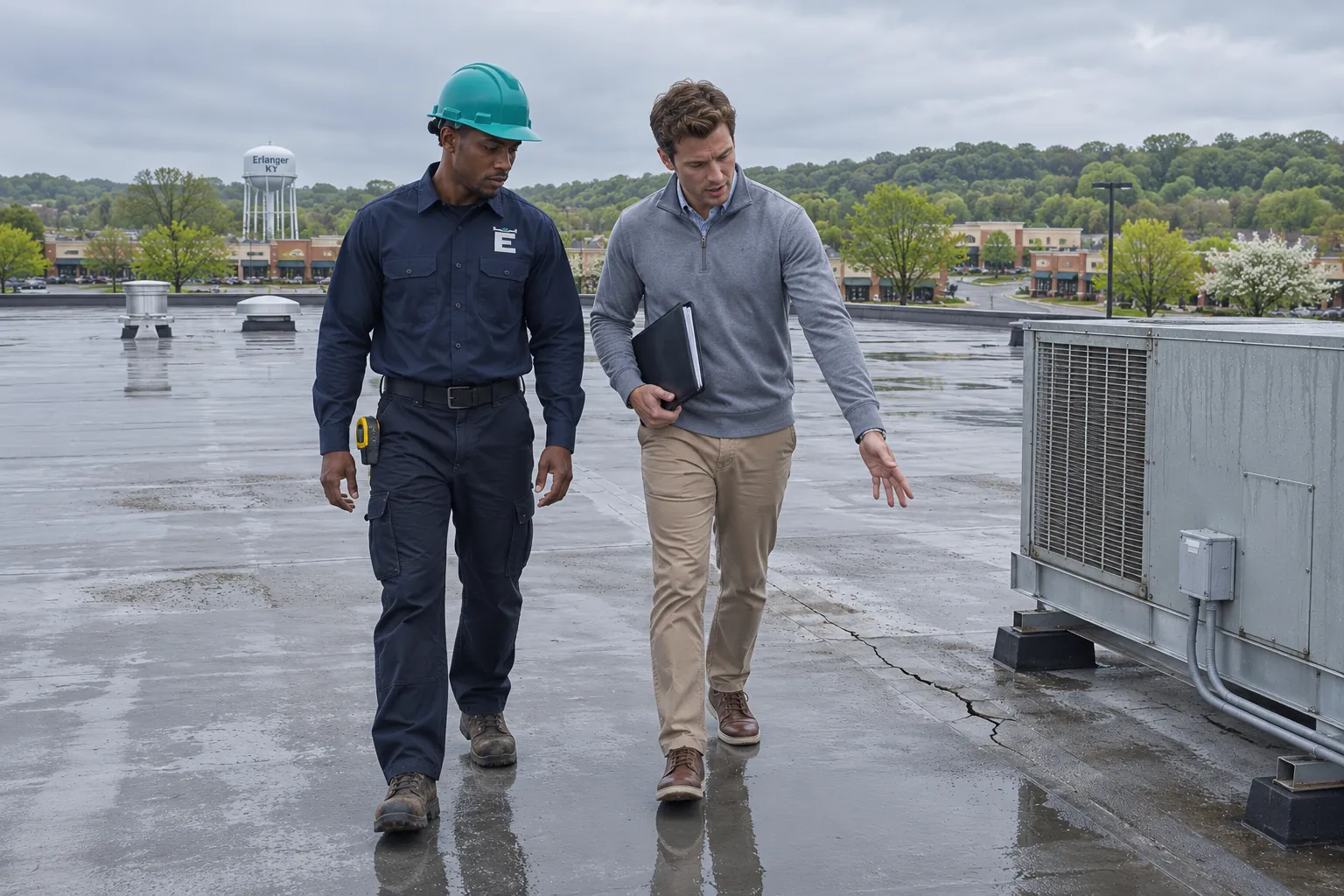
Rely on a Villa Hills commercial roof repair contractor for buildings on slopes above the Ohio River, where wind works edge metal, coping, and ridge caps loose.
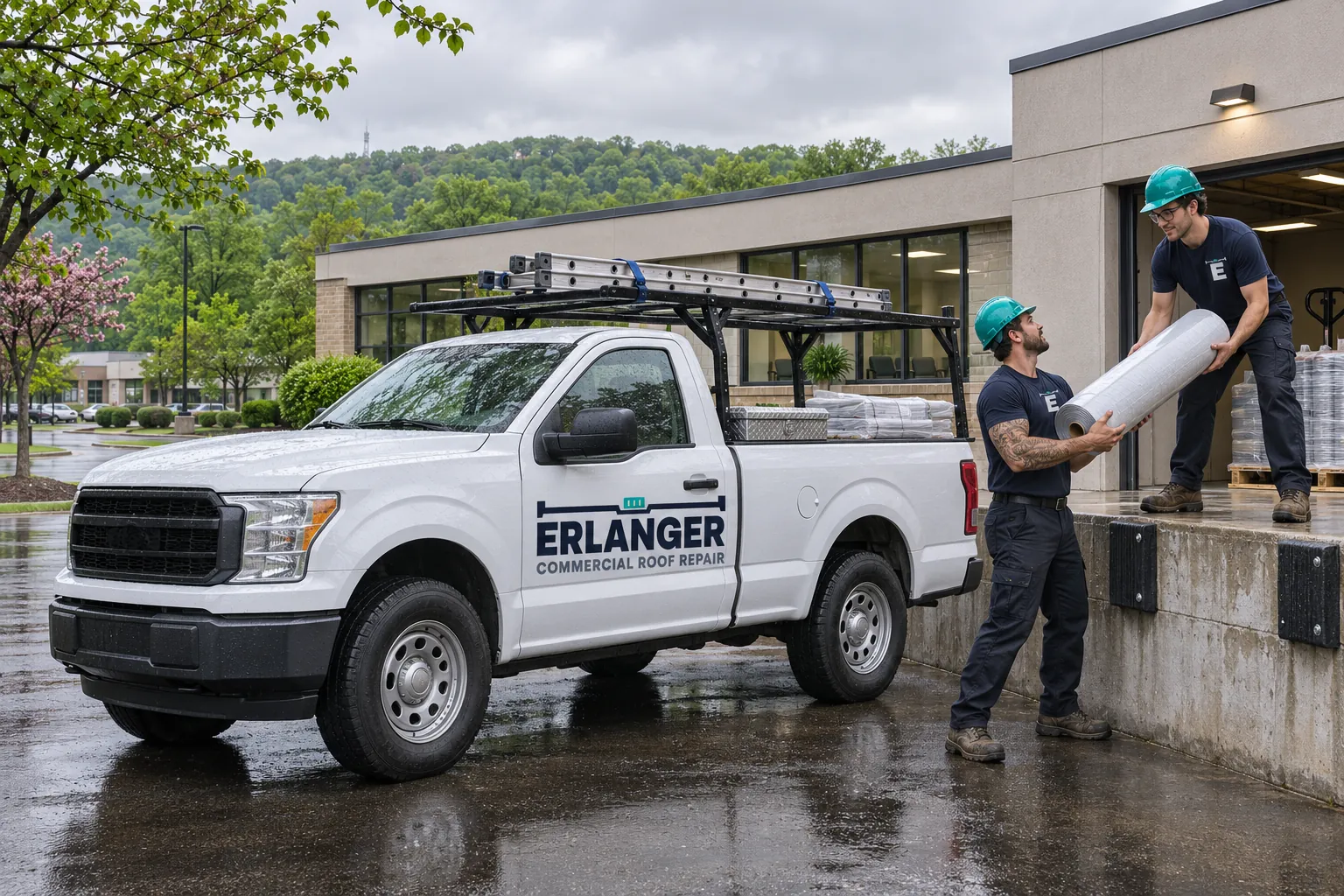
A Villa Hills commercial roof repair contractor starts at the perimeter, because buildings set on slopes over the river take more wind than roofs in the flatter corridors.
Wind starts lifting a roof at its corners and edges. Over time it loosens edge metal, works coping joints open, and pulls at ridge caps, and each loose piece lets the next gust get under the membrane or panel.
Checking those edges after windy storms catches the problem while it is a few fasteners and a sealant joint. Building permits for larger work come from PDS, the same office that covers Erlanger.
Exposure decides where these roofs fail first. These four show up most.
A bent or rattling strip of metal along the roof edge.
Fasteners along the perimeter have loosened. Refastening and resealing the edge stops wind from reaching under the membrane.
Stains on an exterior wall just below the parapet cap.
Sealant between coping sections has cracked. Water runs behind the wall flashing until the joints get resealed or the coping is replaced.
Drips near the peak only during wind-driven rain.
Foam closures under the cap blew out or crumbled. New closures, cap fasteners, and sealant at the cap laps close it.
Punctures or bruises in the membrane after branches came down.
Limbs and blown debris puncture membrane and dent panels. A matching patch or replaced panel piece goes in once the roof is dry.
On an exposed site, a tight perimeter protects everything behind it.
Refastened edge metal keeps the next windstorm from peeling the membrane back from the corner, where a small lift can turn into a large tear.
EdgesResealed coping joints stop the water that runs down inside parapet walls and shows up as stains on interior walls.
CopingFresh closures under ridge caps keep blowing rain out of the top of metal roofs, where it otherwise drips onto stock or desks below.
RidgeDated photos taken after a storm document punctures and lifted edges, which helps with an insurance claim.
RecordsHillside buildings call on every repair type, with the edges usually first in line.
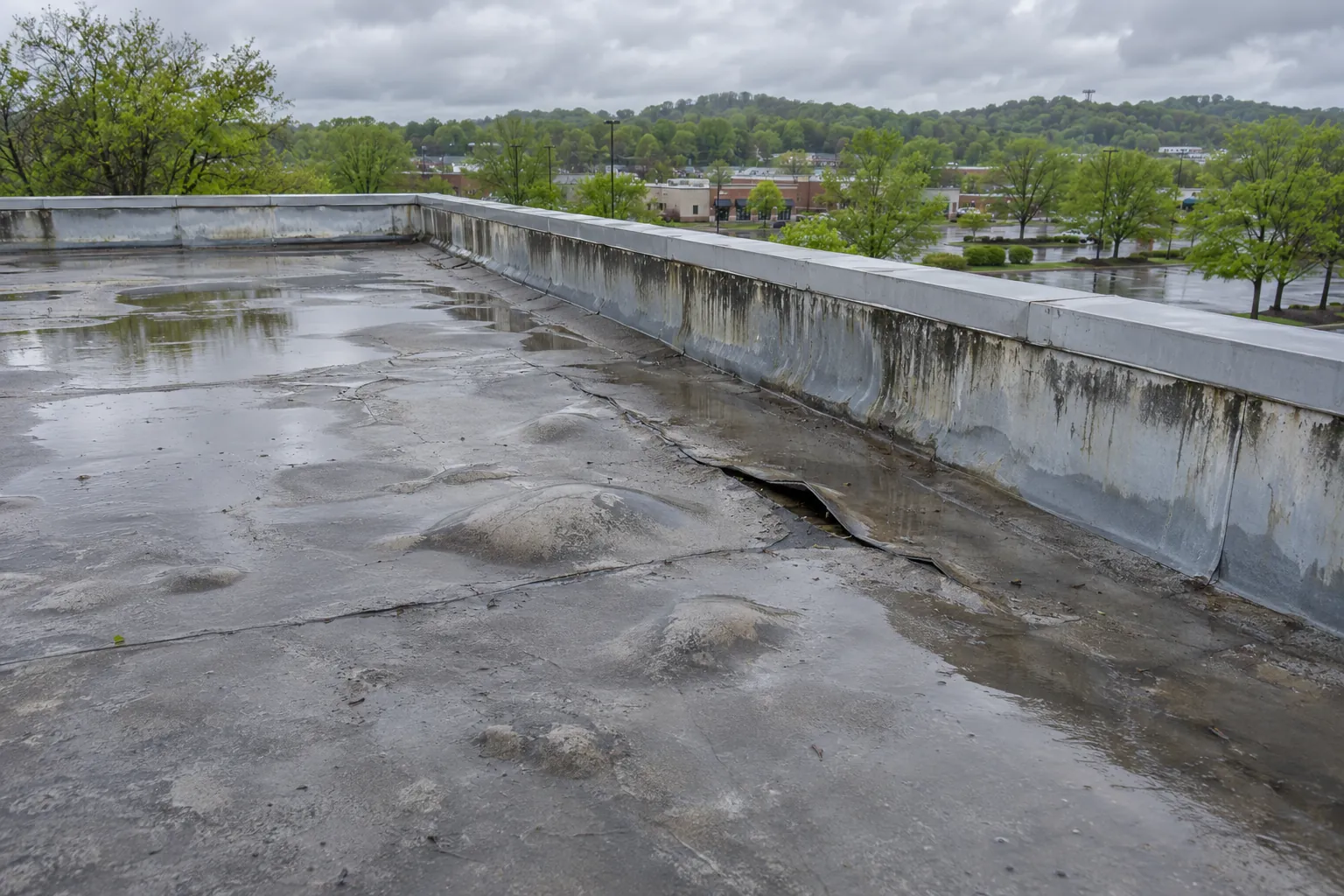
Low-slope membrane roofs get perimeter flashing, seam, and puncture repairs with the same membrane already on the roof.
Flat roof edge and seam repair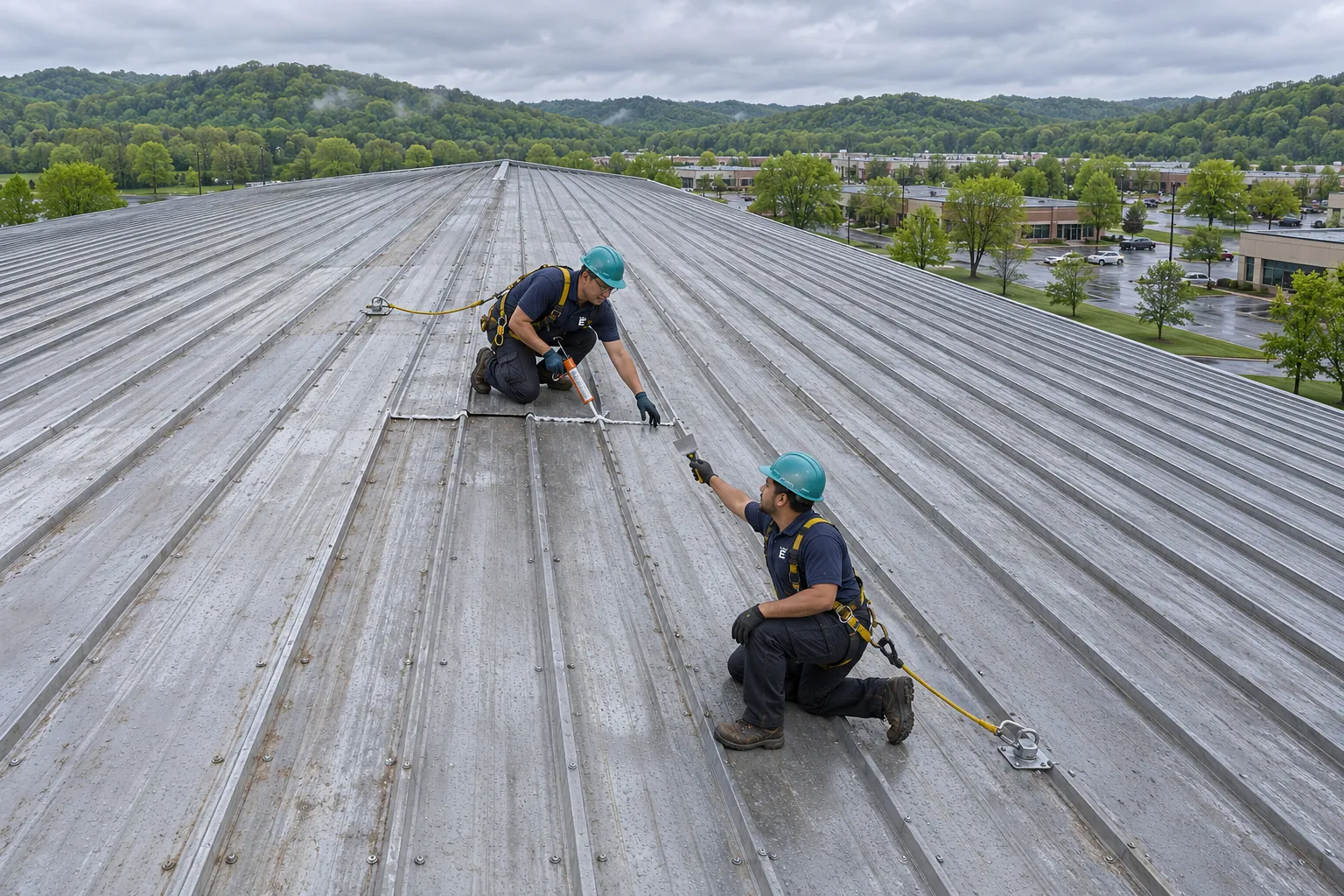
Panel roofs on exposed lots get ridge closures, cap fasteners, and loose trim refastened along with screw rows.
Metal ridge and trim repair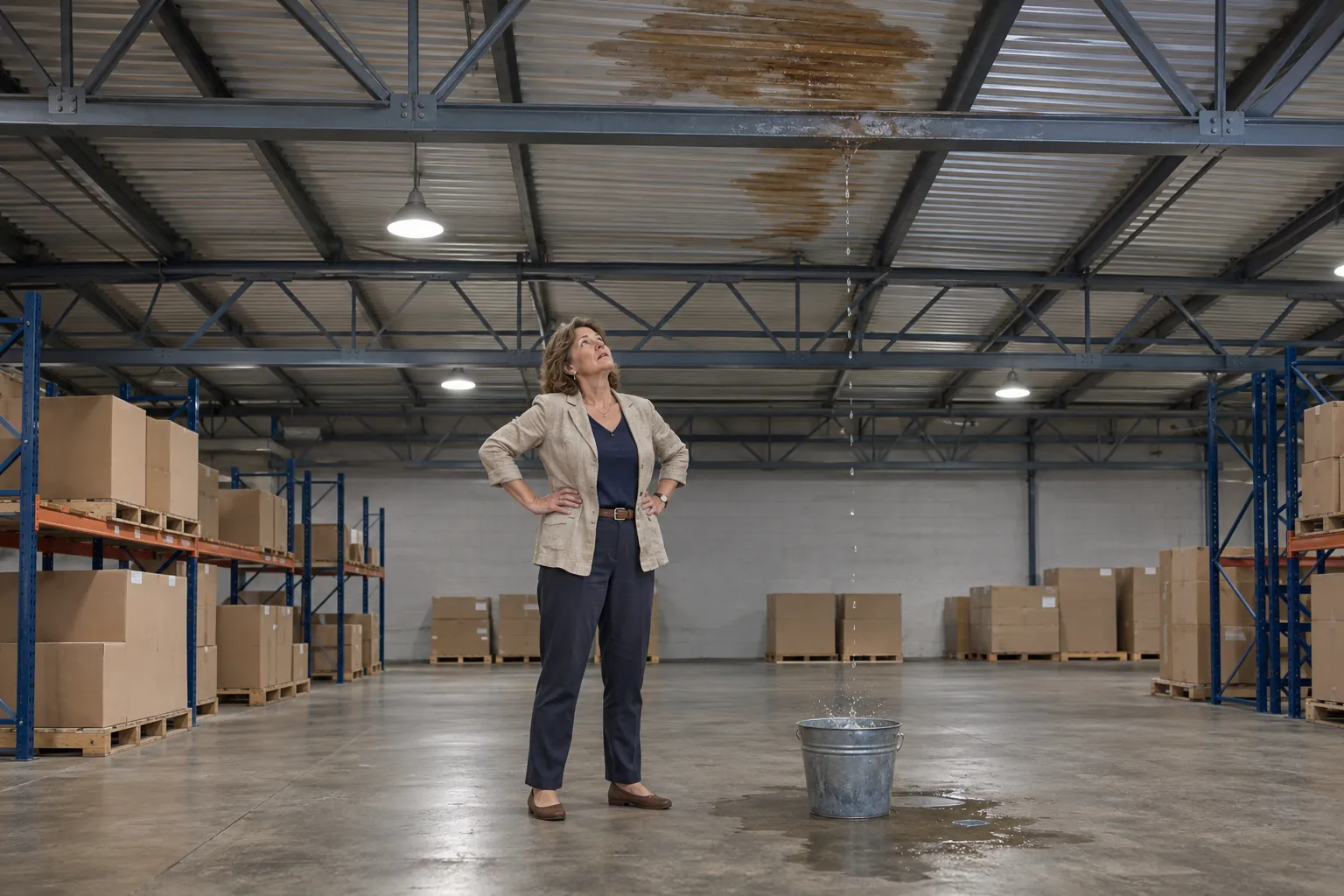
Wind-driven leaks get traced to the wall flashing, coping joint, or ridge that lets blowing rain in.
Wind-driven leak tracing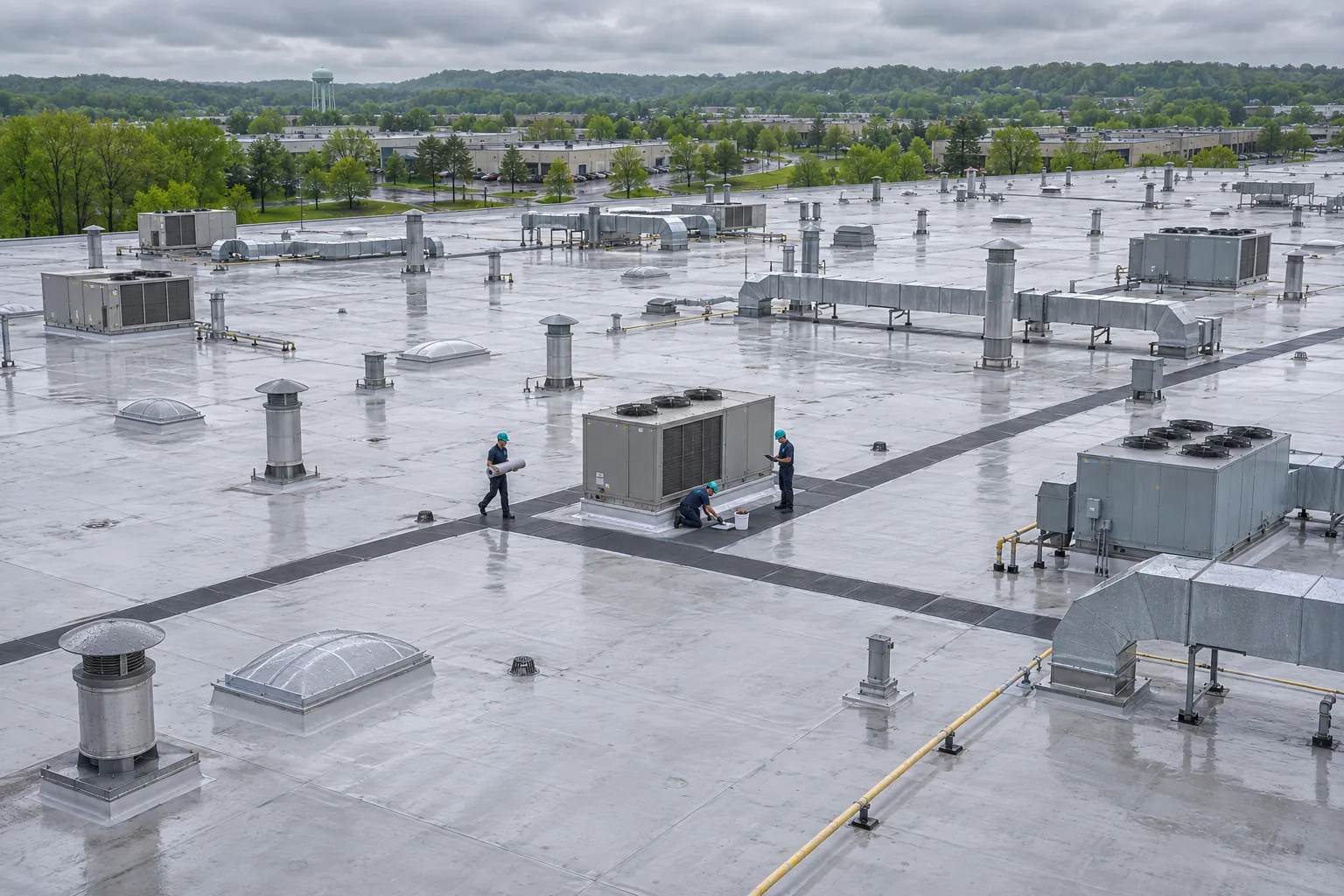
Larger service buildings with rooftop equipment get curb flashing and unit panels checked after strong wind.
Repair around rooftop equipmentStay off the roof until the wind drops, then call. These notes help the crew head for the right edge.
Perimeter repairs on a windy site run in a fixed order.
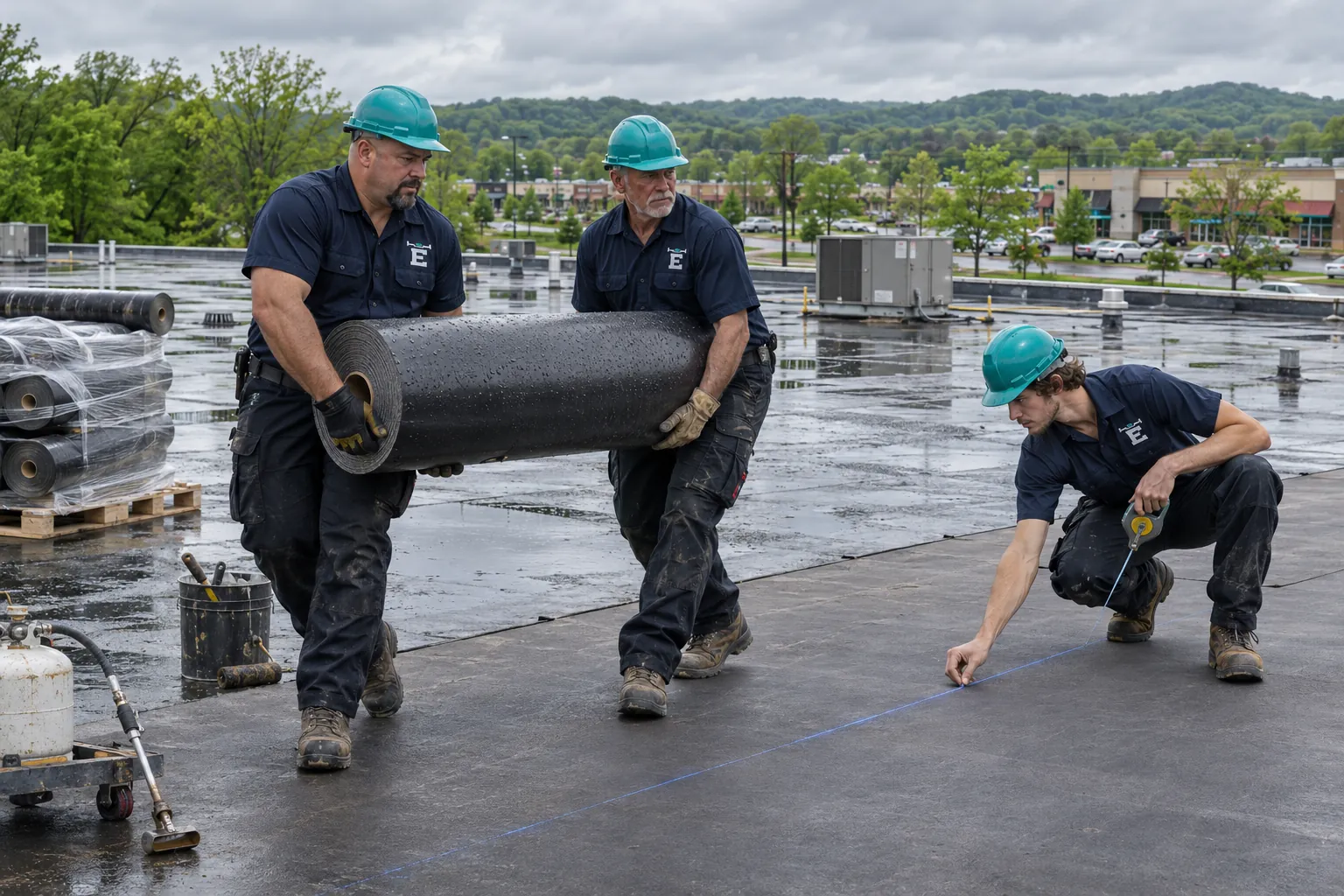
The crew walks the full perimeter first, then the ridge, the field, and any rooftop units, noting loose edge metal, open coping joints, and storm punctures.
Edge metal and trim get refastened, and any temporary hold-down from a storm call comes off before permanent work begins.
Coping joints get resealed or replaced, and ridge caps get new closures, fasteners, and sealant at their laps.
Punctures get matching patches, and dented or torn panel pieces get replaced with the same profile.
Photos of each repaired edge and cap give you a baseline to compare against after the next big wind.
Strip centers, clinics, churches, and metal flex buildings make up the other roofs we repair in the area. Outside these towns? Call us or send us a message.
Elsmere has the largest population among the nearby towns. Its attached storefront rows share long roofs, so tracing a leak there means checking more than one unit.
Elsmere Commercial Roof Repair →Answers on wind, storms, and permits for exposed sites.
Yes. Villa Hills, a Kenton County city on the Ohio River, gets the same repair service as Erlanger. Buildings on slopes over the river face more wind, which loosens edge metal, ridge caps, and coping over time.
Wind lifts a roof at its corners and perimeter first, and exposed slopes catch more of it. Repeated gusts work fasteners loose and open sealant joints until water or wind gets under the edge.
Edge metal and coping first, then ridge caps, the membrane field for punctures from limbs, rooftop units for shifted panels, and drains for debris. Dated photos help with an insurance claim.
Waiting lets each storm pry it further. A temporary hold-down or patch can go on in cold weather, followed by permanent refastening and sealing on a dry, mild day.
Planning and Development Services of Kenton County (PDS) issues building permits for Villa Hills. Small edge and seam repairs are a different scale from deck work or a unit swap, and describing the scope to PDS settles it.
In most cases, no. Refastened edge metal and resealed coping keep the same drainage path. Changes to gutters, scuppers, or where water discharges are separate decisions made with the owner first.
Tell us which edge or cap came loose and when the wind hit. We secure the perimeter and fix the damage behind it.