Equipment
Curb Flashing at Units
- You See
A ceiling stain under one of several rooftop units.
- What It Means
Shrunken or cracked base flashing at the curb corners. New flashing wraps up the curb, and the unit's own panels get checked too.

We work as an Edgewood commercial roof repair contractor for clinics and offices, sealing leaks over occupied rooms first and finishing permanent repairs around patient hours.
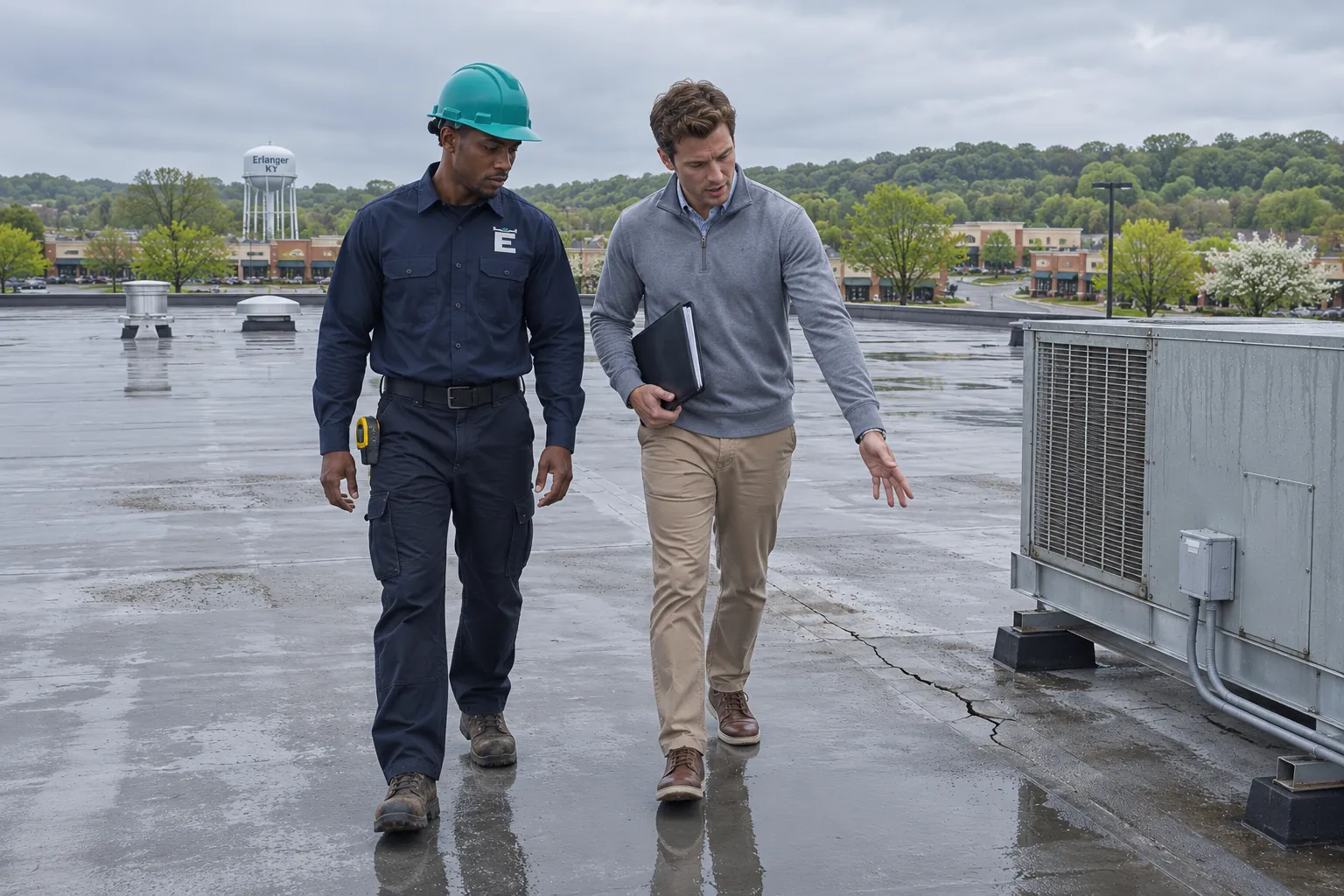
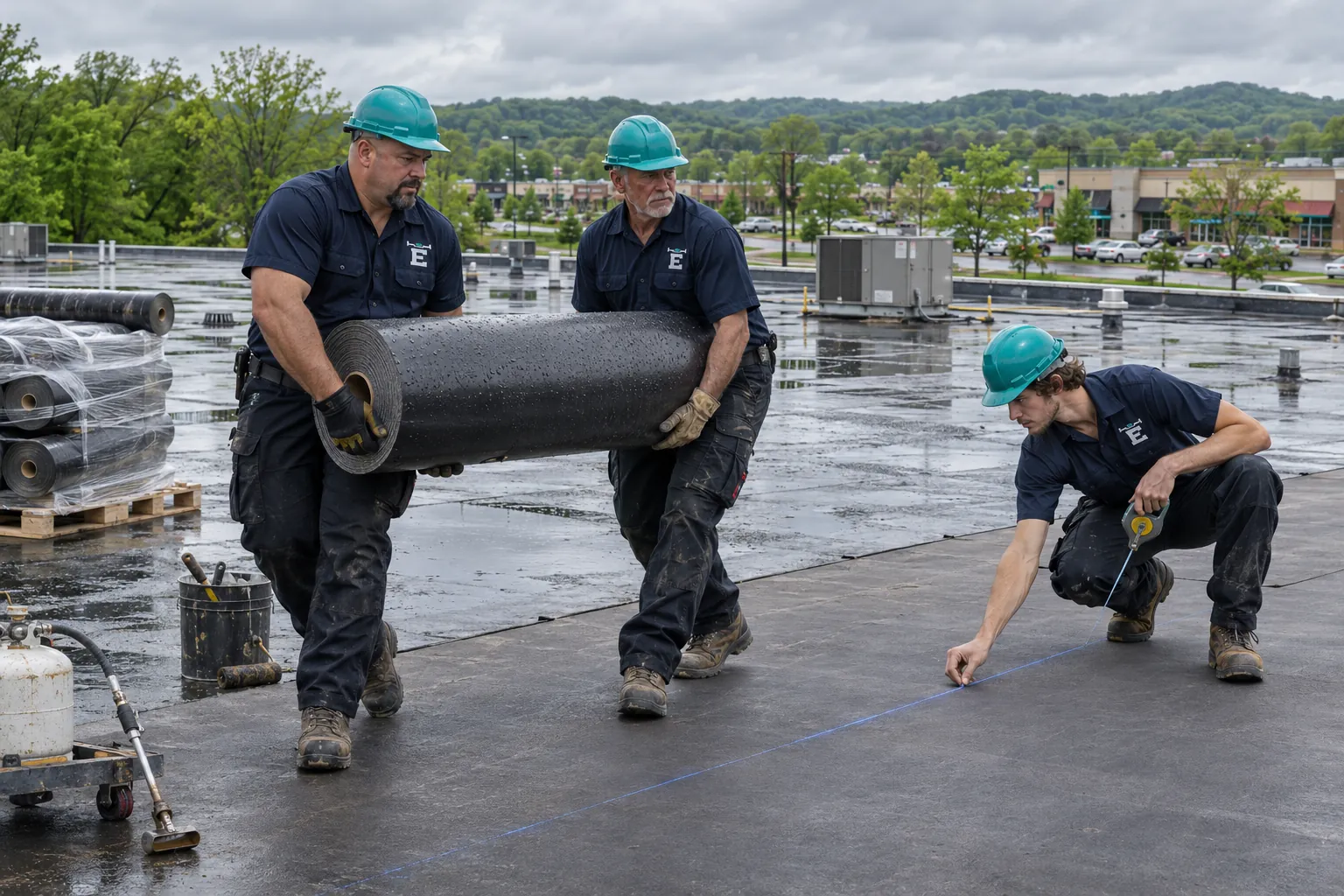
An Edgewood commercial roof repair contractor handles a clinic leak in two stages: a fast seal that stops water over the exam room, then a permanent repair planned around patients.
Medical buildings near the St. Elizabeth Edgewood campus carry many rooftop units, and curb flashing is a frequent source. Facility managers know which rooms sit under which units, and sharing that map speeds up both stages.
Products near air intakes matter too. Low-odor primers and adhesives keep the work from drawing complaints inside.
Clinic and office roofs carry more equipment than most, and the trouble follows it.
A ceiling stain under one of several rooftop units.
Shrunken or cracked base flashing at the curb corners. New flashing wraps up the curb, and the unit's own panels get checked too.
Algae or wear in a strip running from a unit.
A condensate line draining onto the roof wears the surface over time. Routing it to a drain protects the membrane.
Drips near restroom or exam room vents.
Fan curbs and pipe boots crack or lose their seal. Each gets resealed or replaced with a boot matched to the membrane.
Leaks that start after a cold snap.
Freeze and thaw cycles open aged seams. A temporary patch holds until a dry, mild day allows the permanent weld or tape.
For a clinic, the payoff of a roof repair shows up inside the building first.
A sealed entry point lets staff reopen an exam room instead of working around buckets and wet tiles while the permanent repair gets scheduled.
CurbsInterior protection during the work and a fixed curb afterward keep water off exam tables, computers, and stored supplies below.
FlashingLow-odor primers and adhesives near air intakes let repairs go ahead without sending fumes through the building's air system.
IntakesCondensate lines routed to a drain stop the slow wear they cause where they spill across the membrane.
DrainsMedical and office roofs in Edgewood draw on every repair type at some point.
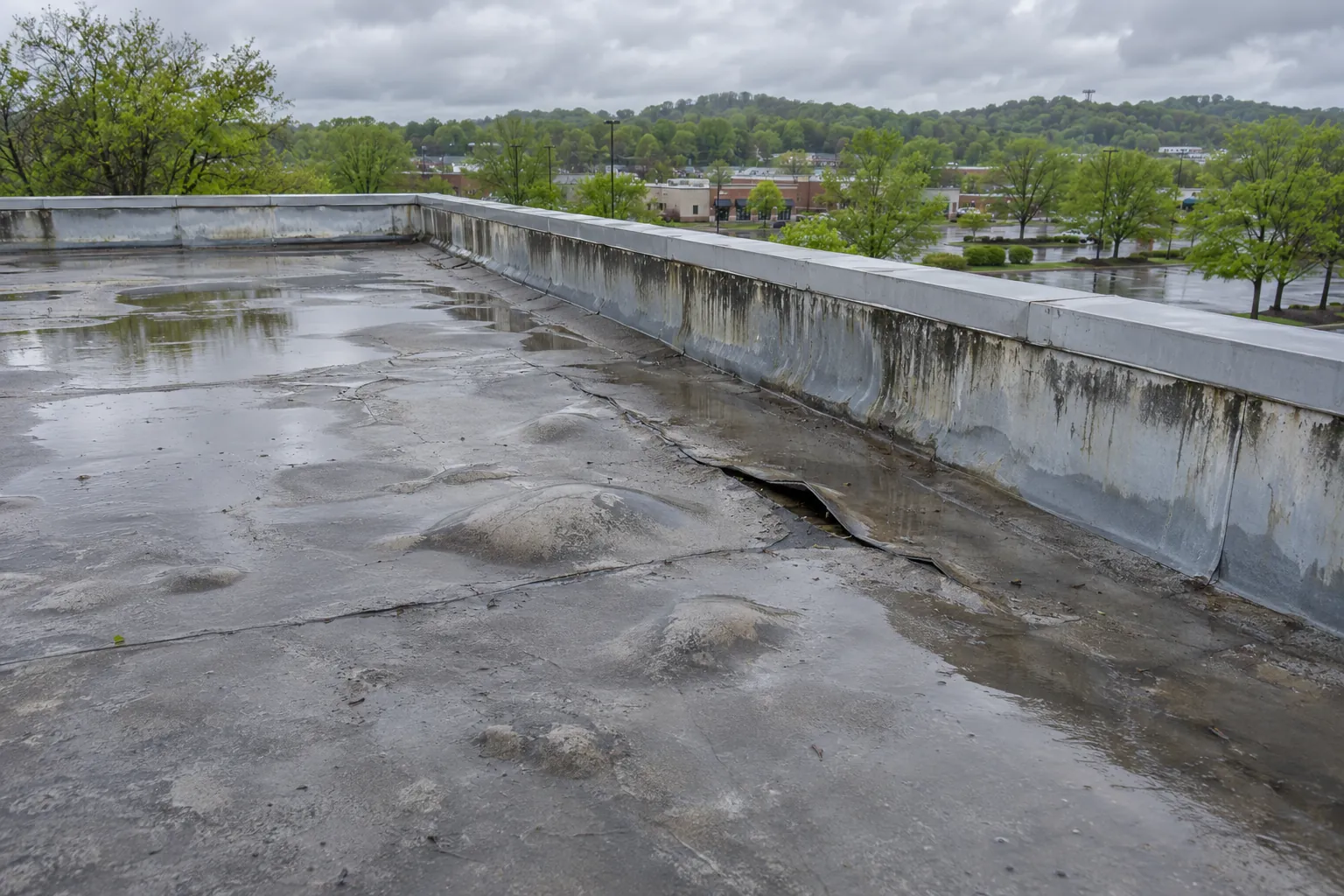
Most clinic roofs are low-slope membrane, so curb corners, seams, and drains get welded, taped, or reset with matching material.
Flat roof repair for clinic roofs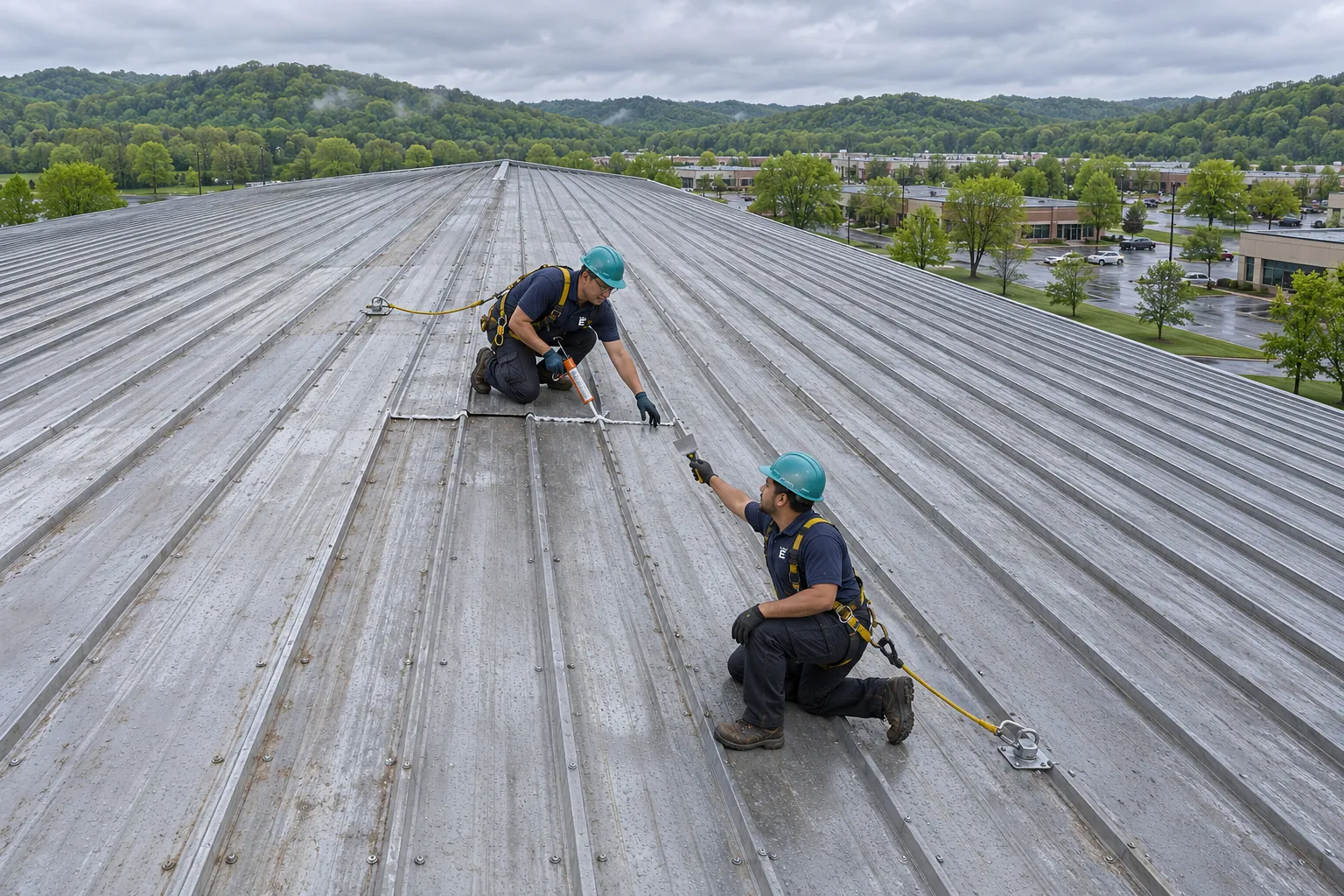
Covered entries and canopies over patient drop-off areas are often metal, with screws and laps that leak onto walkways.
Metal canopy and entry repair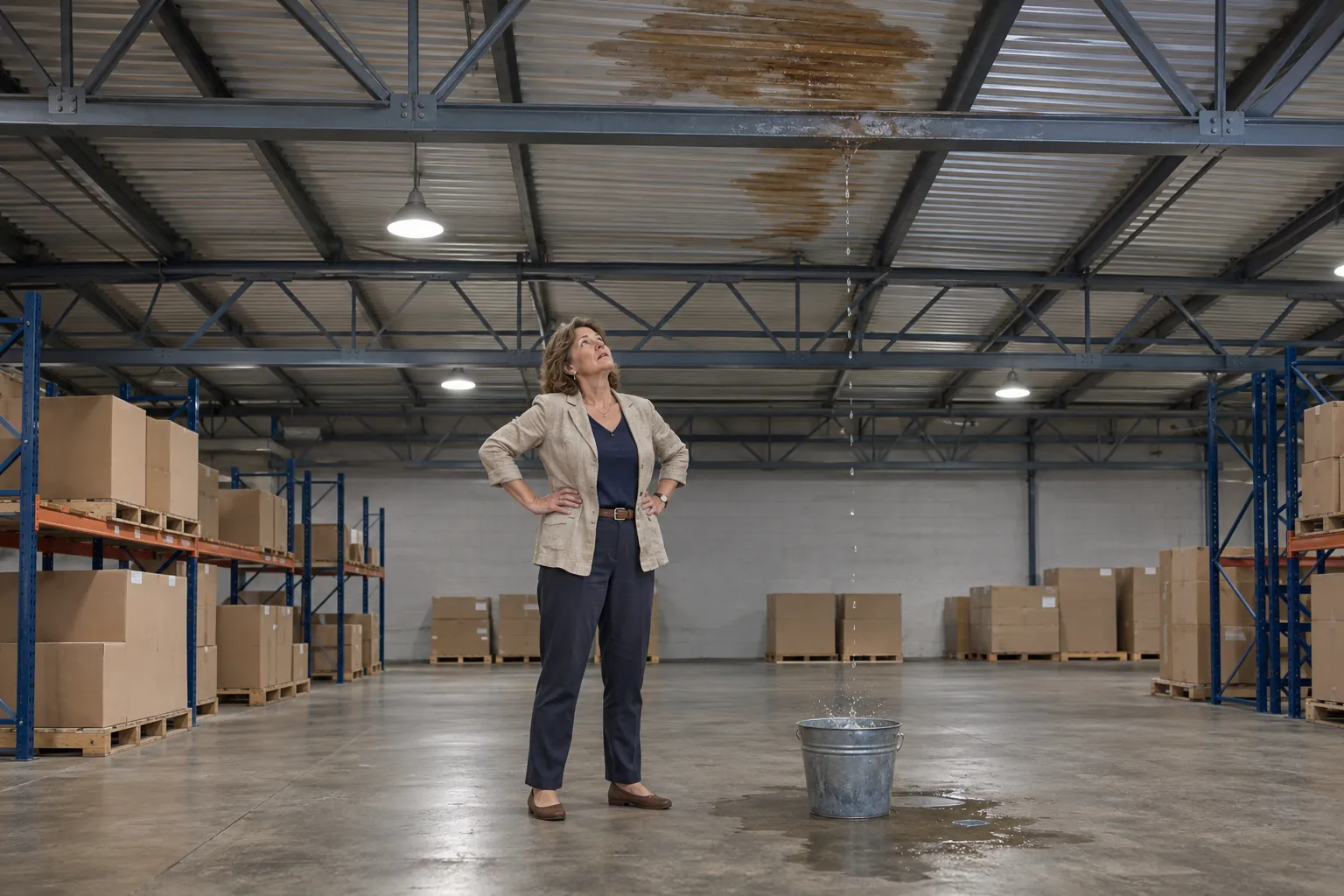
Room-by-room tracing lines up each stain with the unit or vent above it before the permanent repair gets planned.
Leak tracing over occupied rooms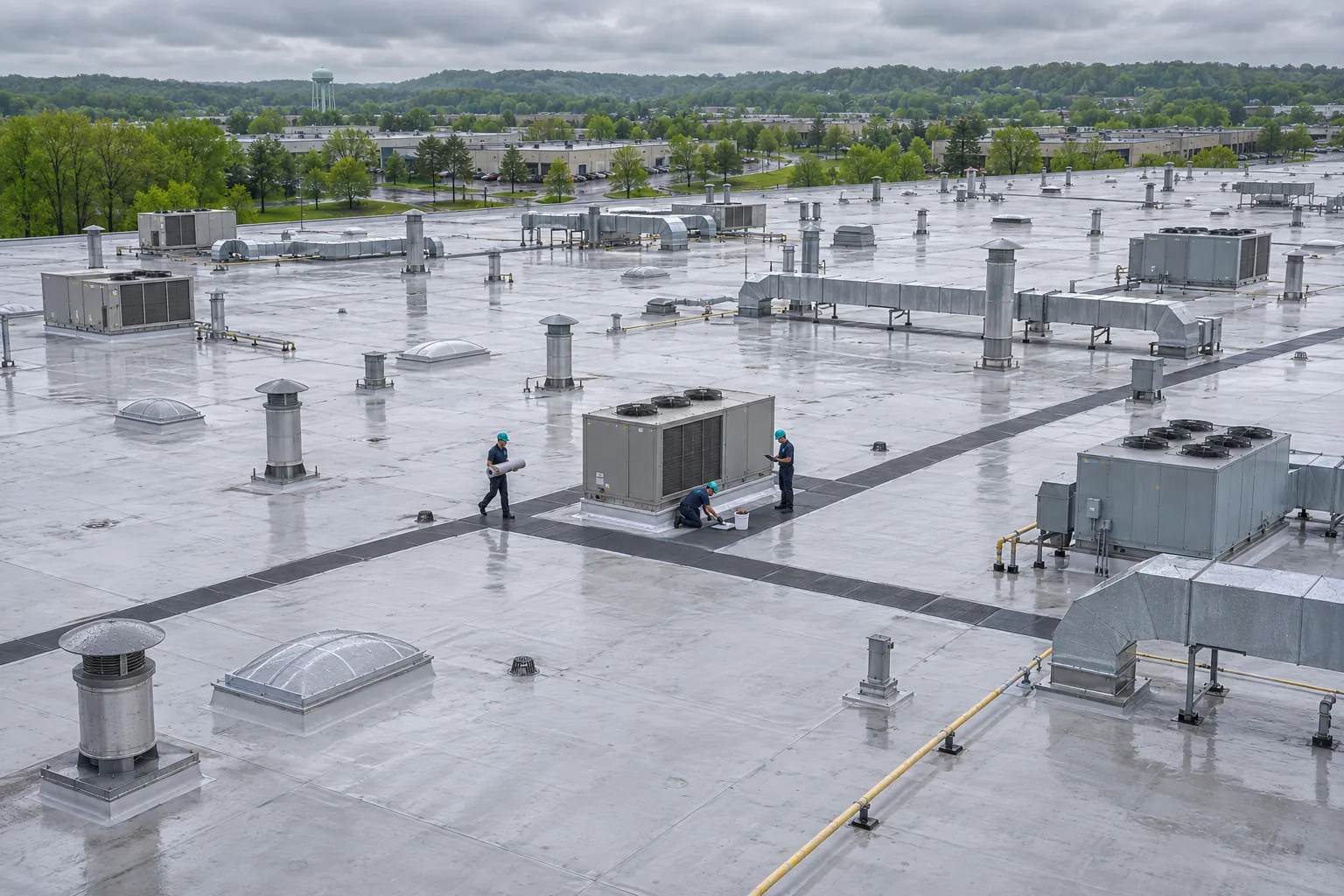
Larger medical buildings run heavy rooftop equipment and exhaust, which brings vibration and residue repairs like a plant roof.
Repair around heavy rooftop equipmentClear the room, cover equipment, and call. Share these so the temporary seal goes on the right spot.
The order keeps rooms open and moves the noisy work to quiet times.
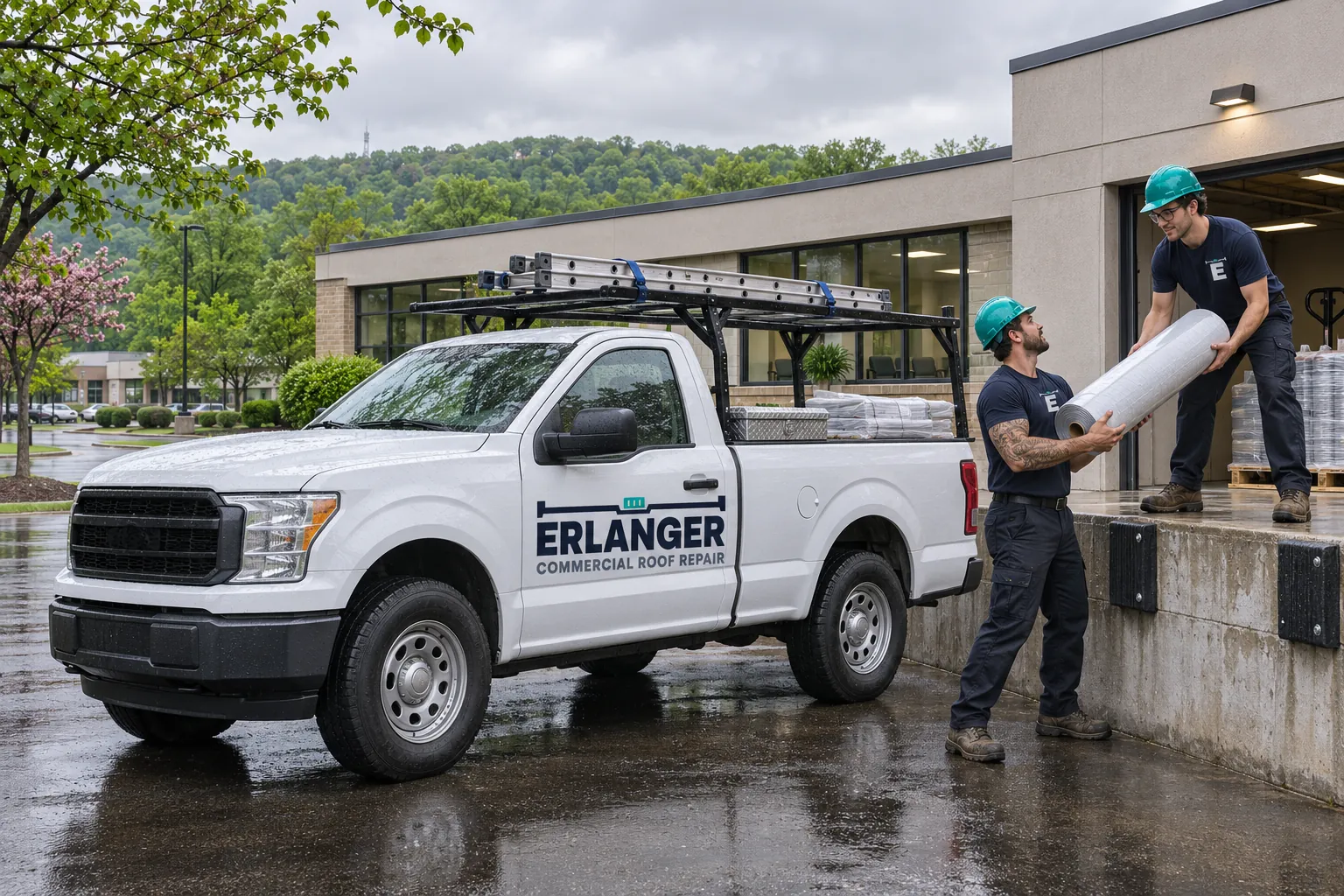
The crew checks the stained room, then the units, curbs, vents, and seams above it, using the facility map of rooms and rooftop units.
A temporary peel-and-stick patch goes on the suspected entry point, and interior protection covers equipment below.
Curb and seam repairs get scheduled for early mornings or weekends, with low-odor products chosen for areas near air intakes.
New base flashing, rewelded seams, or new boots replace the temporary patch with matching materials.
The repaired detail gets checked, and the facility manager receives photos and a note on any other unit worth watching.
Retail rows, small offices, churches, and metal flex buildings make up most of our other repair work nearby. Somewhere else? Call us or send us a message.
Elsmere has the largest population of the nearby towns. Its strip centers bring a different job: leaks that cross from one storefront into the next.
Elsmere Commercial Roof Repair →Answers for clinic and office facility managers.
With a fast temporary seal on the suspected entry point, interior protection over equipment and exam tables, and a permanent repair at curbs and seams scheduled for early mornings or weekends. Low-odor primers and adhesives go near air intakes.
Yes. Peel-and-stick patches and roof cement stop water fast and are meant to last only until a proper repair. The permanent fix uses matching membrane or flashing on a dry surface, and the temporary material comes off first.
Medical buildings carry many units, and each curb is a joint in the waterproofing. Base flashing shrinks and cracks at the corners, curb-to-unit gaskets dry out, and access panels loosen, so both the curb and the unit get checked.
The building's HVAC contractor. Gaskets between the curb and unit, loose access doors, and lifting a unit are their work. Roof repair covers the base flashing, counterflashing, and any cricket on the uphill side.
Yes. Most repair work happens from the roof, and the noisy or odor-producing parts get booked for early mornings or weekends. Interior protection goes down only where a repair sits directly over an occupied room.
A map of which rooms sit under which rooftop units, photos of each stain, patient hours, and the locations of air intakes. With those in hand, the crew heads straight to the right curb.
Tell us which rooms are affected and when the building is quietest. We seal the leak first and plan the rest around you.