Grease
Oil-Softened Membrane
- You See
Swollen, gummy membrane in a ring around an exhaust fan.
- What It Means
Oils break down EPDM fastest. The soft area gets cut out and replaced with a resistant membrane, plus grease containment at the fan.
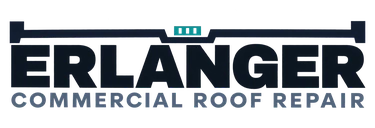
As an Erlanger industrial roof repair contractor, we repair grease-damaged membrane, equipment flashing, big-roof drains, and expansion joints while plants keep running.
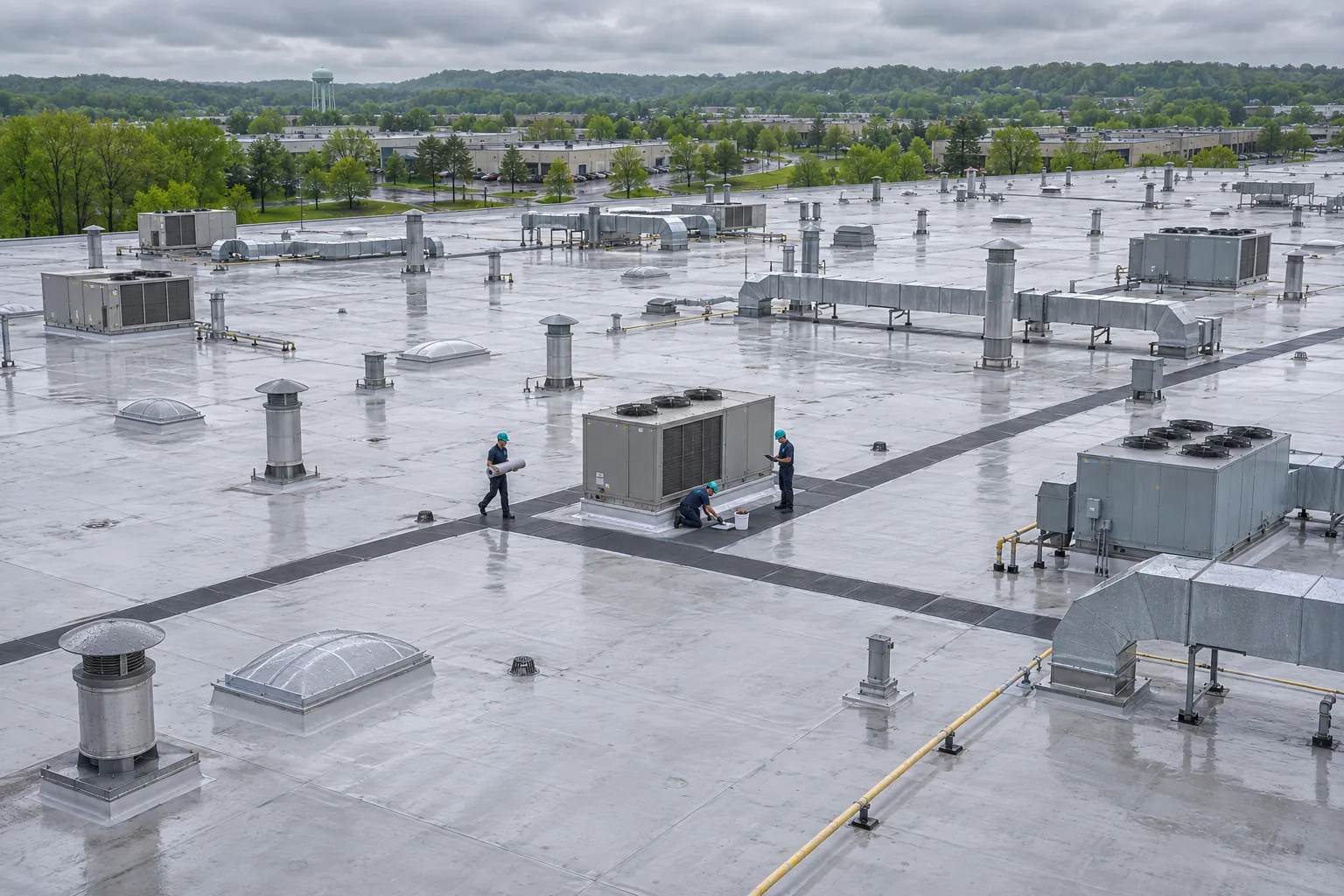
An Erlanger industrial roof repair contractor separates damage that stops at the membrane from damage that has reached the deck.
| Roof Condition | Membrane Repair | Flashing or Joint Rebuild | Deck Work First |
|---|---|---|---|
| Soft, swollen membrane at an exhaust fan | Usually Fits | Rarely | Rarely |
| Torn flashing at equipment rails | Rarely | Usually Fits | Rarely |
| Torn expansion joint cover | Rarely | Usually Fits | Rarely |
| Rusted deck plates under a long-term leak | Rarely | Rarely | Usually Fits |
| Punctures near a service area | Usually Fits | Rarely | Rarely |
Deck repairs often need a building permit, and weakened wood or concrete decks go to an engineer first.
Plant roofs carry more stress than office or retail roofs, and it shows in these spots.
Swollen, gummy membrane in a ring around an exhaust fan.
Oils break down EPDM fastest. The soft area gets cut out and replaced with a resistant membrane, plus grease containment at the fan.
Torn flashing and loose fasteners beside large fans.
Constant vibration works flashing loose at rails and stands. Rebuilding it with extra attachment stops the tearing.
Water spread across a wide area around one drain.
Large roofs rely on a few drains for huge areas. Dust and process residue clog strainers, so one failed drain causes wide ponding.
Leaks along a straight line across a long building.
Joint covers tear as long roof sections move. New bellows or flexible membrane covers get tied into the roof on both sides.
Industrial repairs fix the membrane and stop whatever keeps damaging it.
The source gets identified, residue gets cleaned from the surrounding membrane, swollen sections come out, and a resistant membrane section gets flashed in with grease traps at the fan.
Broken clamping rings and bolts get replaced, missing strainer domes go back on, leaking bowls get reflashed, and damaged drain bodies get retrofit inserts.
Torn covers get new bellows or flexible membrane, with flashing tied into the roof on both sides of each joint.
Rusted steel deck plates get cut out and replaced with new panels, then insulation and membrane close the area, and the original leak gets found and stopped.
Plant roof repairs protect production as much as the roof.
Most repairs happen from the roof surface with no interior shutdown, and noisy work gets scheduled away from quiet operations inside the plant.
FieldResistant membrane plus containment keeps grease from reaching the patch, where a plain patch over oil-damaged EPDM would fail quickly.
CurbsA rebuilt drain clears water from a section of roof that can cover thousands of square feet, which ends ponding against seams across that area.
DrainsLeaks over docks and aisles get priority, since water there endangers forklift traffic and the stock stored below.
DeckGrease damage spreads until the source stops. Share these before the visit so the crew plans the right materials.
Plant safety rules apply to the roof crew too, so orientation comes before the ladder.
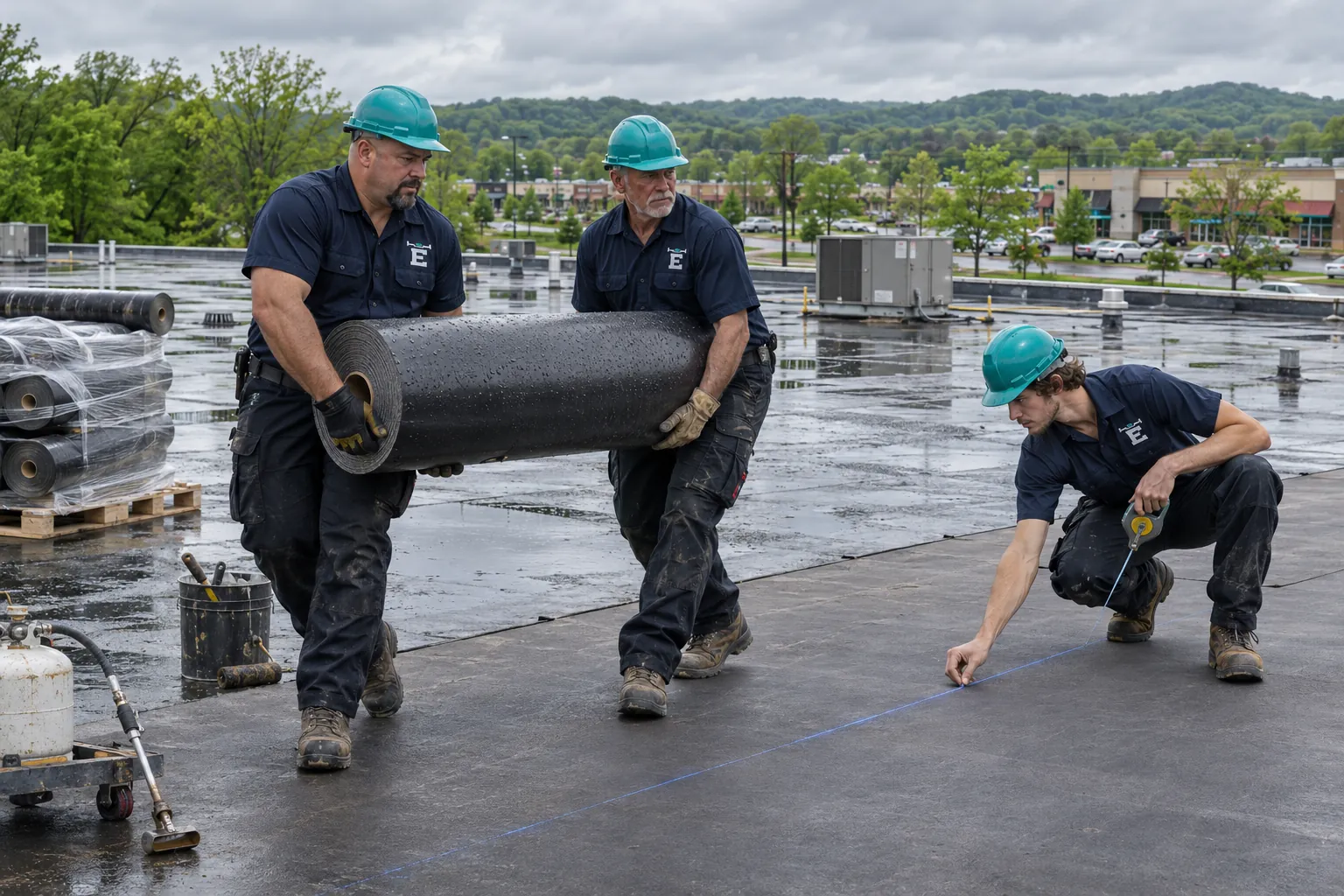
After site orientation, the crew walks the roof around fans, stacks, rails, drains, and joints, and checks the interior under any leak over a production line.
Hot-work permits cover torch-applied or heat-welded repairs, and air intake shutdowns get set when welding fumes or adhesives sit near units.
Rooftop machinery the repair touches gets locked out with plant staff, and interior protection goes down under repair areas over production lines.
Contaminated membrane comes out, drains get rebuilt, joints get new covers, and walkway pads go down along service routes.
Equipment goes back in service, the work area gets cleared, and photos show each repair with notes on cleaning around exhaust fans.
Large plants often need more than one type of repair.
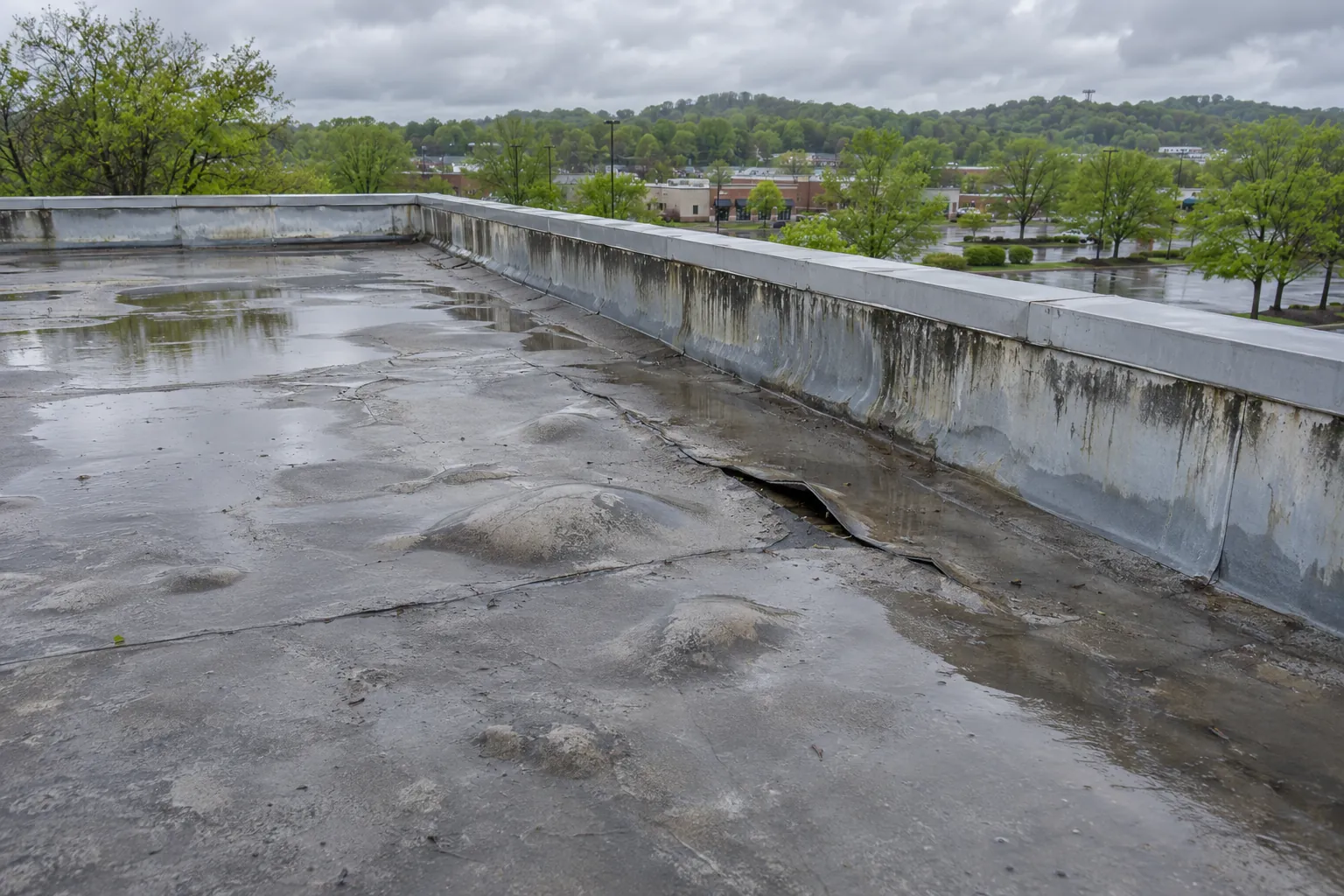
Office wings and low-slope sections around a plant get seam, blister, and wet insulation repairs.
Flat roof repair in Erlanger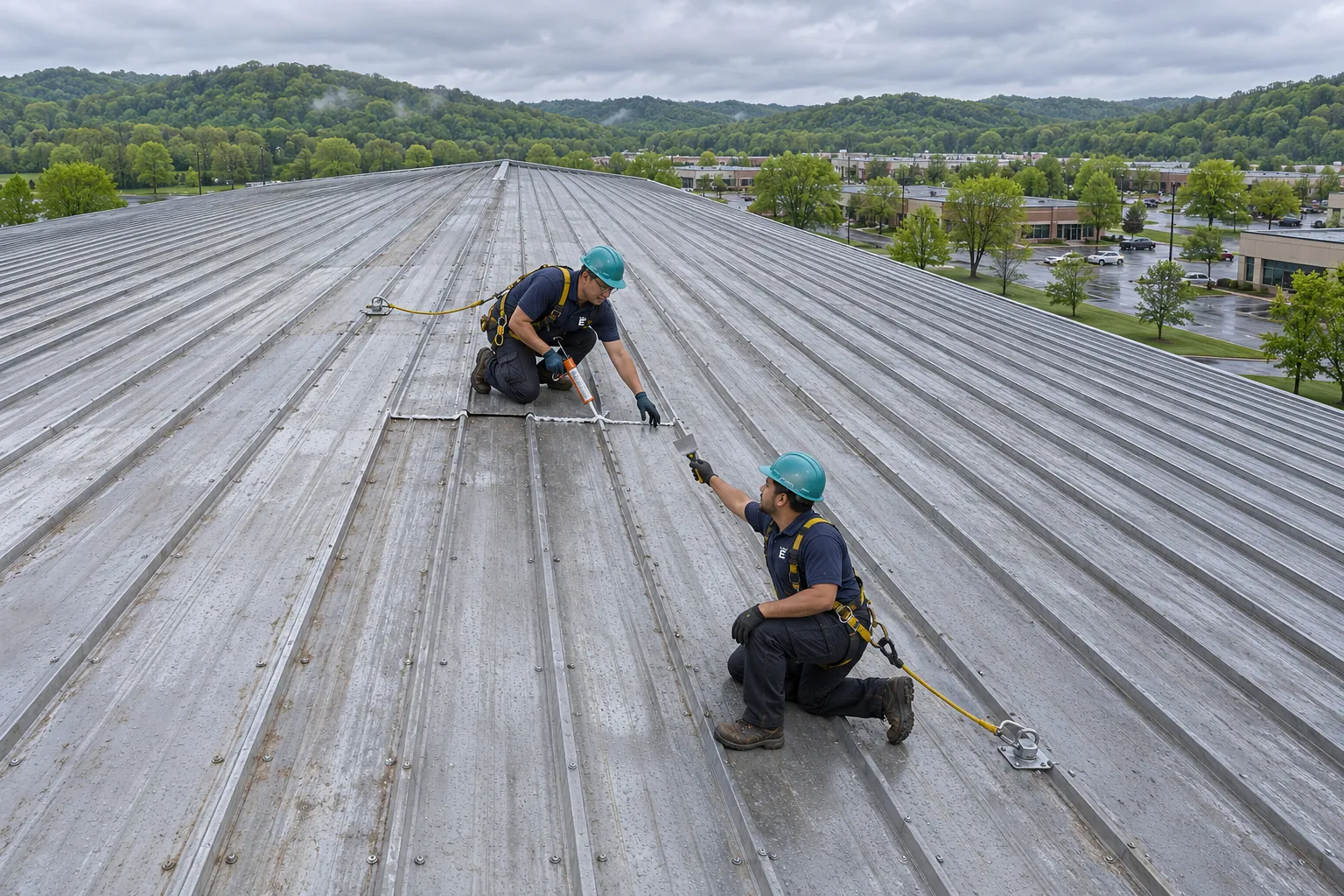
Metal warehouse and storage buildings on the same site need fastener and end lap repairs.
Metal roof repair in Erlanger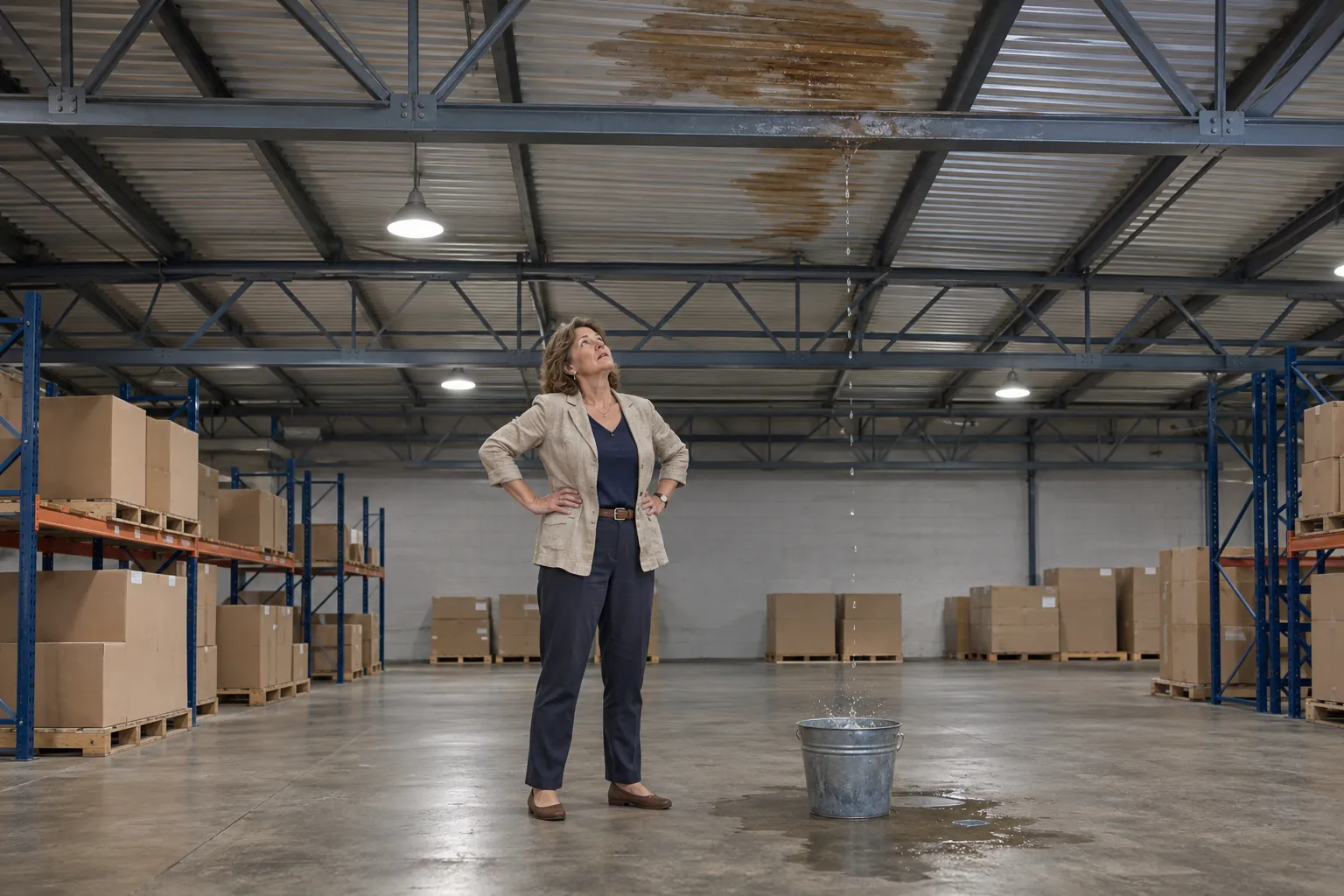
Leaks over production lines with no clear source get traced section by section before repairs start.
Leak tracing and repairAnswers on grease, operations, drains, and joints.
Grease and chemical damage, punctures from heavy maintenance traffic, and leaks around large equipment and process vents top the list. Vibration damage around fans and compressors and drains clogged with dust round it out.
The softened area gets cut out and replaced with a resistant membrane, then containment goes in so the problem stops. Oils break down EPDM fastest, while PVC resists grease better. Regular cleaning around exhaust fans cuts down repeat damage.
In most cases, yes. Repairs happen from the roof surface with no interior shutdown, scheduled around hot work, crane lifts, and sensitive areas. Hot-work permits, air intake shutdowns, lockouts, and interior protection get arranged ahead of time.
Plant safety staff for orientation and site procedures, maintenance for lockouts and air intakes, and production for scheduling noisy work. Naming one contact for the roof crew keeps those pieces moving together.
Broken clamping rings and strainers get replaced, the membrane at the drain bowl gets reflashed, and leader pipes get cleared from the roof or an interior cleanout. Overflow drains and scuppers give water a second exit when primary drains clog.
Torn joint covers get new bellows or flexible membrane with flashing tied in on both sides. Rusted steel deck plates get cut out and replaced before new insulation and membrane go on, and the original leak gets stopped.
Tell us the building, the equipment on the roof, and the plant's safety rules. We plan the repair around them.