Leaves
Single-Drain Flooding
- You See
A broad pond covering much of the roof after a storm.
- What It Means
One clogged strainer stops the only exit. Clearing it and adding an overflow scupper keeps the next storm from doing the same.

Count on a Lakeside Park commercial roof repair contractor for small office and church roofs, where one or two drains carry all the water.

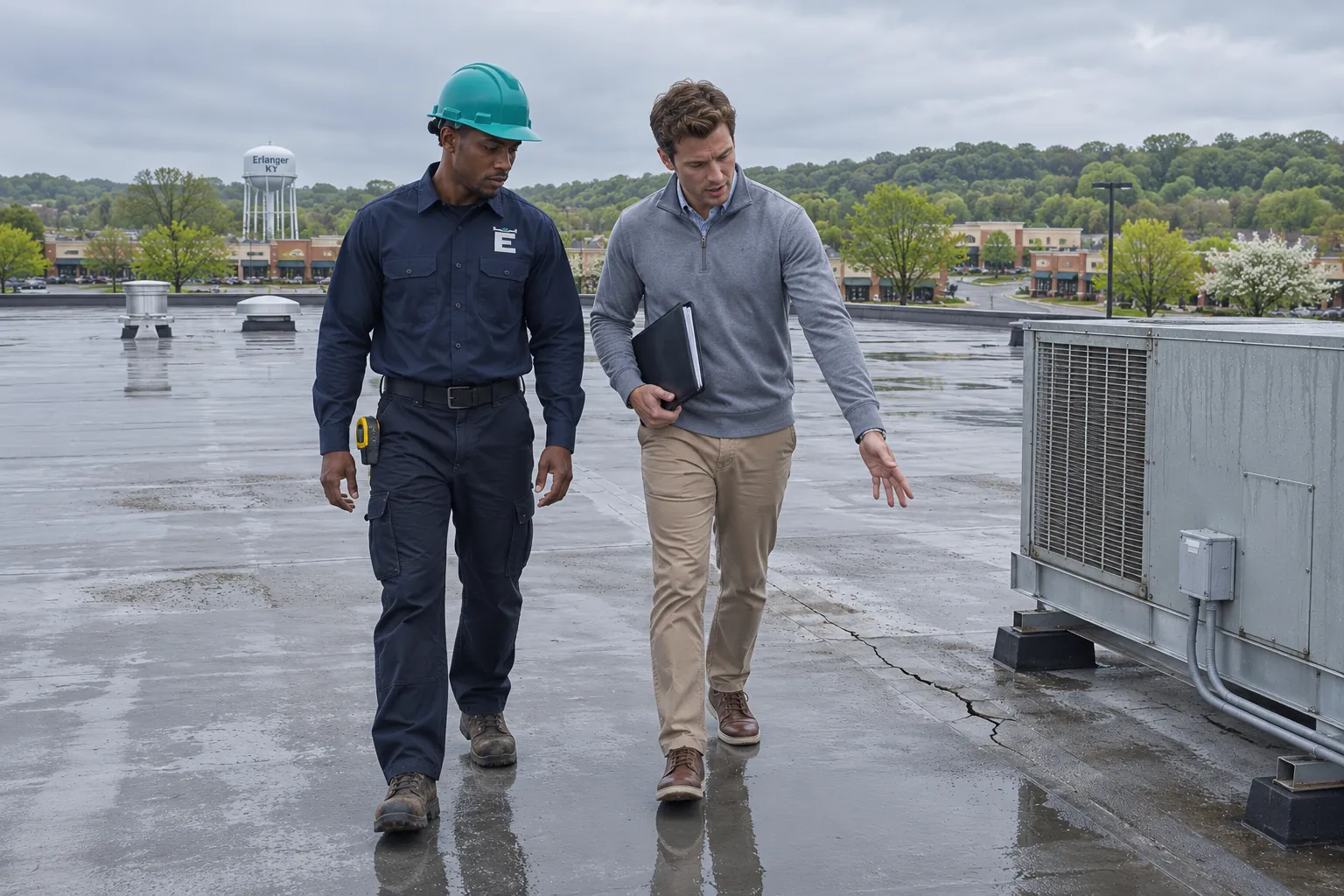
A Lakeside Park commercial roof repair contractor spends much of the job on drains, because small office and church roofs here often have only one or two of them.
With so few exits, a single clog floods much of the surface. Nearby trees drop leaves and seeds onto many of these roofs each year, and the strainer is where it all ends up. Seed pods and twigs tend to mat over the strainer dome first.
Clearing the drain is half the repair. Resealing the drain flashing and checking the clamping ring keep water from finding a way in around the bowl.
Small roofs have less margin when something blocks the water.
A broad pond covering much of the roof after a storm.
One clogged strainer stops the only exit. Clearing it and adding an overflow scupper keeps the next storm from doing the same.
A stain on the ceiling right under the drain.
The ring that clamps the membrane to the drain bowl has loosened. Tightening it and resealing the flashing closes the gap.
Water that drains slowly even with a clean strainer.
The blockage sits down in the pipe. Flushing from the roof or an interior cleanout clears it.
Ice at the drain and leaks along nearby flashing in winter.
Frozen strainers stop flow and water rises against the flashing. Clearing drains each fall cuts down on the ice buildup.
On a small roof, a working drain protects nearly everything.
A clear strainer and flushed leader pipe let a small roof drain fully instead of holding a pond across most of its surface.
DrainsAn overflow scupper keeps water off the flashing on the days a leaf mat beats the strainer.
OverflowLess standing water means less wear on seams and the surface near the drain, where small roofs age fastest.
SeamsDrains cleared in fall freeze less often, so meltwater moves off the roof instead of rising against the flashing around a frozen strainer.
FlashingResealed drain flashing stops the stain that tends to show up over a pew, a desk, or a hallway right under the bowl.
InteriorSmall roofs here still call on the full set of repairs.
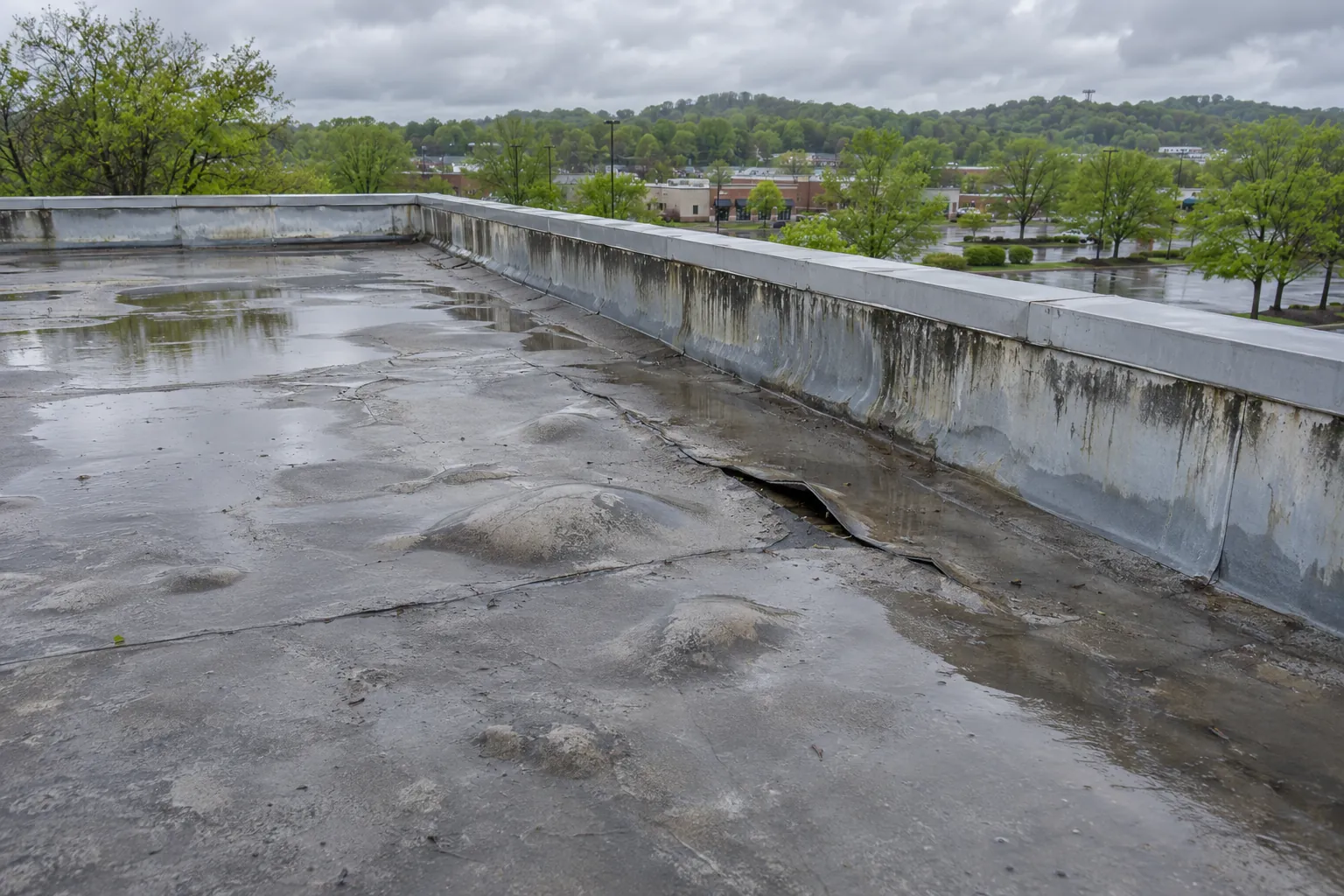
Low-slope office and church roofs get drain flashing, seam, and blister repairs in matching membrane.
Flat roof repair for offices and churches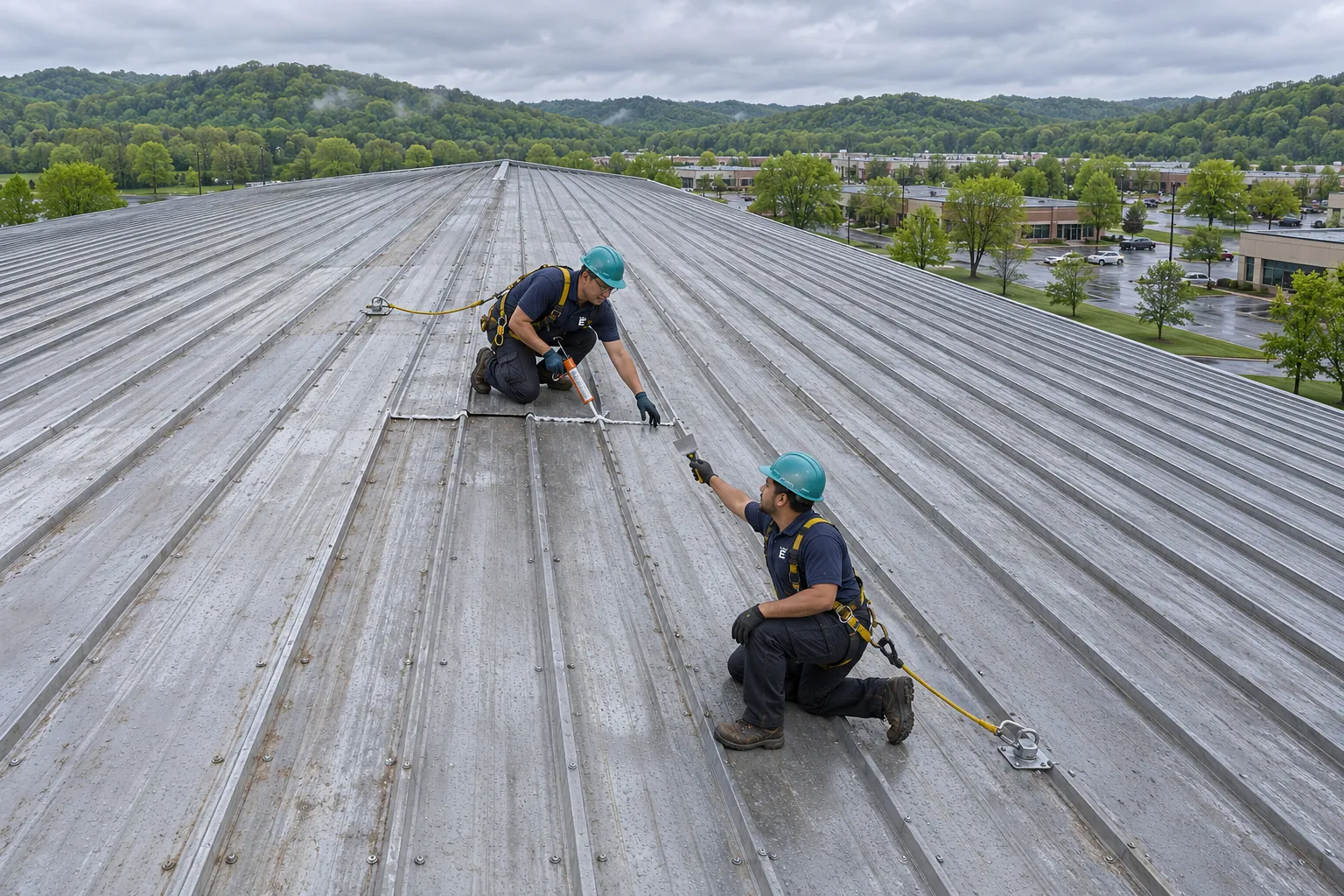
Metal canopies and storage buildings on church and office lots get fastener, lap, and trim repairs.
Metal canopy and shed repair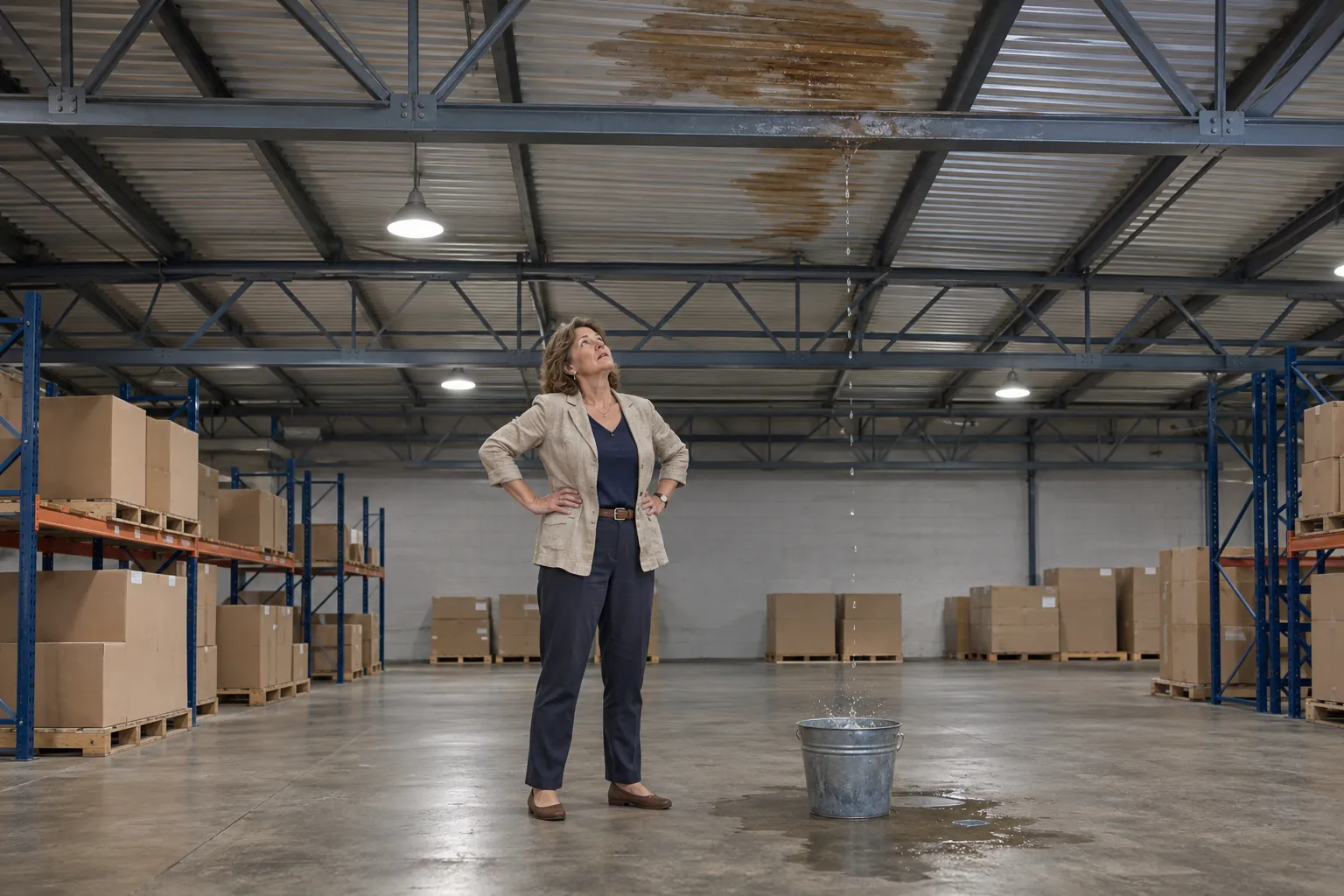
Stains near the middle of a ceiling get traced to the drain bowl, a pipe boot, or a seam nearby.
Leak tracing on small roofs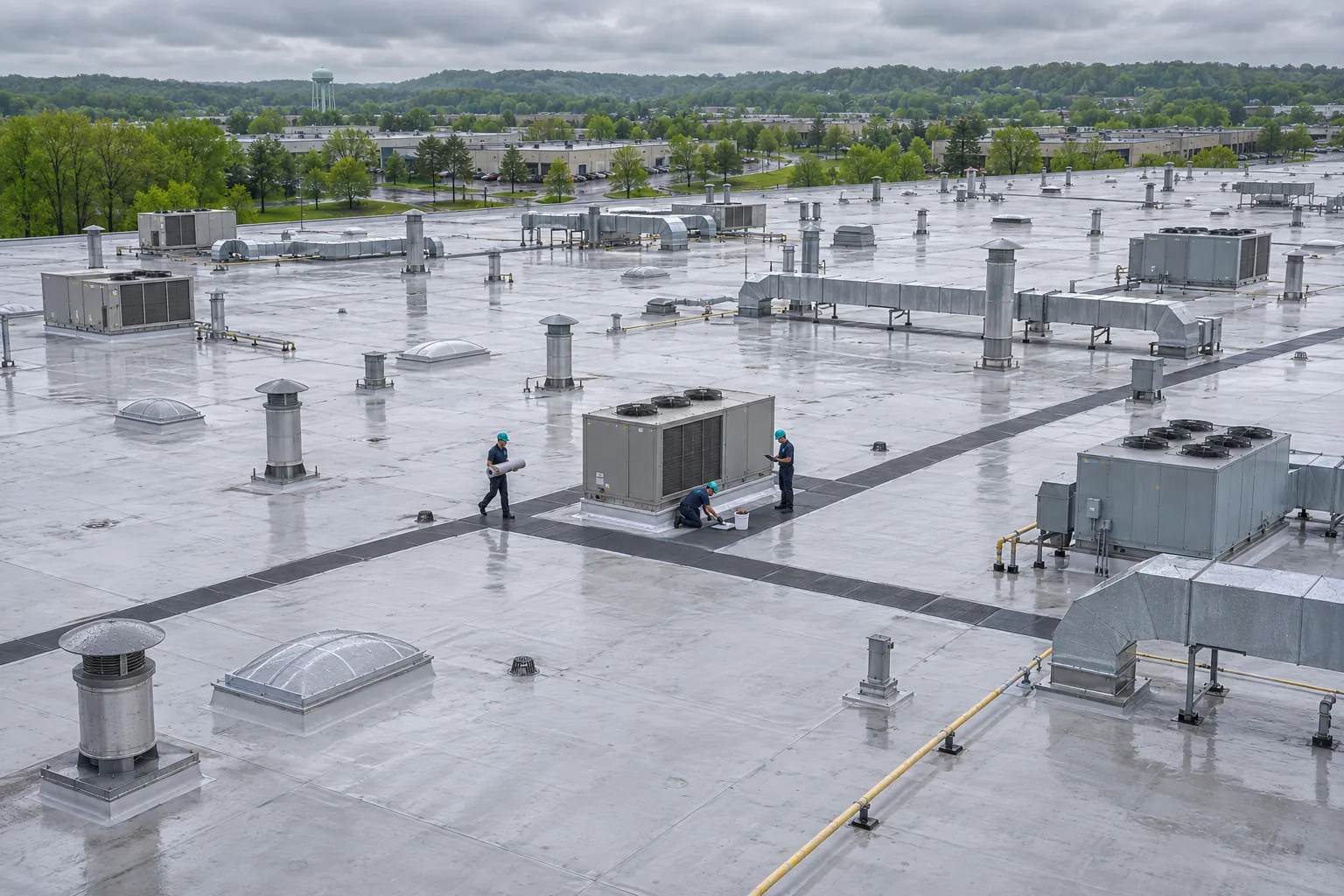
Service and light commercial buildings with heavier equipment get curb and drain repairs sized for their use.
Repair for service buildingsThat usually means the drain is blocked. Have these ready and the crew starts at the drain.
Small-roof drain work runs in a short, fixed order.
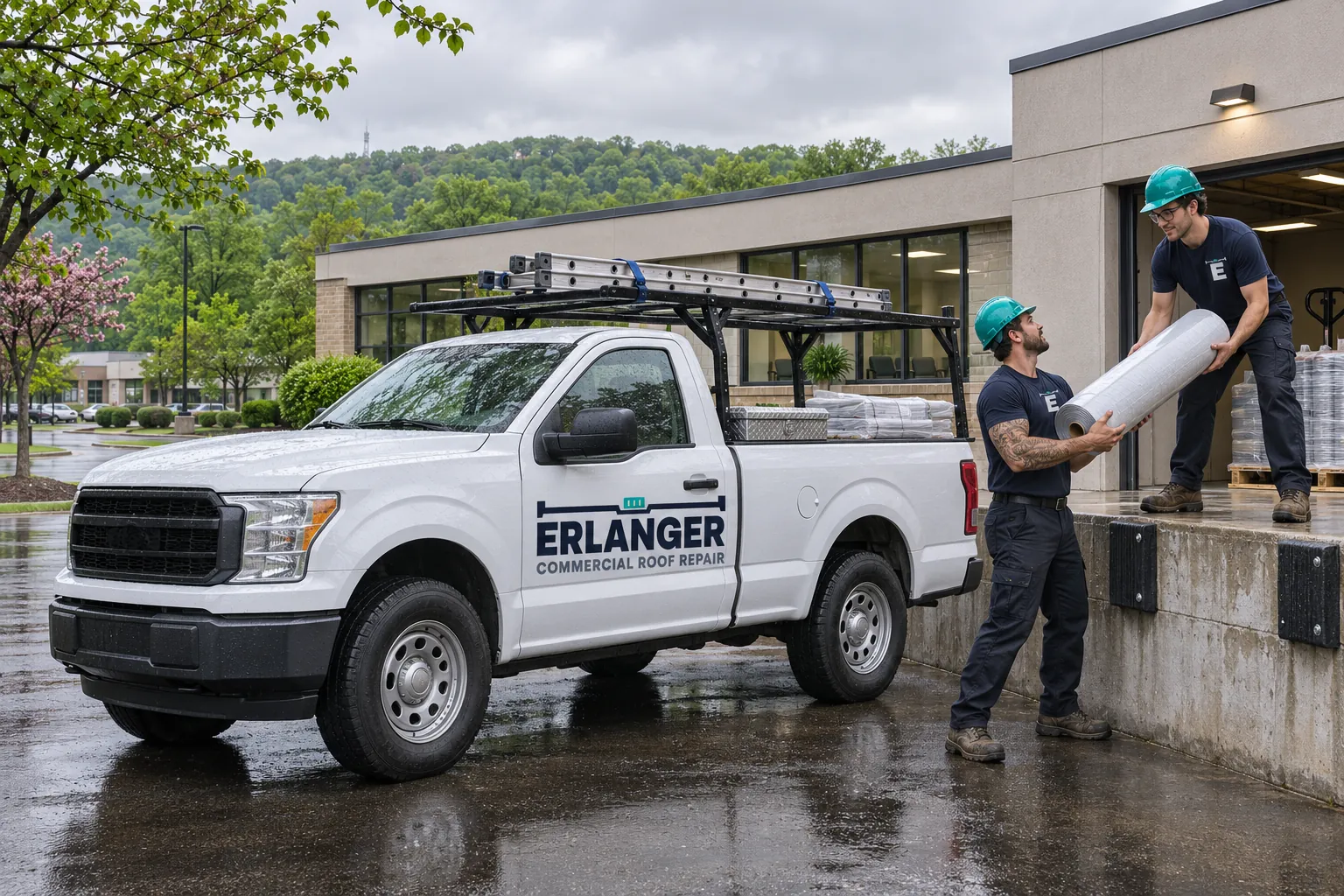
The crew checks the stain inside, then each drain, the flashing around it, nearby seams, and any trees dropping debris on the roof.
Leaves, twigs, and roofing granules come out, and the strainer gets cleaned or replaced with a new dome.
The pipe gets flushed from the roof or from an interior cleanout until water runs freely.
Clamping rings get tightened and drain flashing gets resealed where the membrane meets the bowl.
Where the roof has no second exit, an overflow scupper goes in, and photos record the finished drain.
Strip centers, clinics, retail rows, and flex buildings fill out the other towns we repair roofs in. Not listed? Call us or send us a message.
Among the nearby towns, Elsmere has the largest population, with storefront rows sharing long roofs. A leak there can start over one unit and land in the next.
Elsmere Commercial Roof Repair →Answers for office managers and church facility committees.
By clearing debris from the strainer, flushing the leader pipe from the roof or an interior cleanout, tightening the clamping ring, and resealing the drain flashing. Where the roof has no overflow, adding a scupper gives water a second exit.
Water still standing a day or two after rain, a pond centered on the drain, or a stain on the ceiling under the bowl. Slow draining with a clean strainer points to a blockage down in the leader pipe.
The same way as any low-slope roof: trace the stain to the drain, seam, or flashing above it and repair with matching membrane. Work gets scheduled around services and events so the building stays usable.
Yes. Roof work happens from the outside and can be booked for weekdays or other quiet times. Interior protection goes down only where a repair sits over the sanctuary or meeting rooms.
Each fall after leaf drop and each spring, plus after big storms. Small roofs with trees nearby need more frequent checks, since one clog floods so much of the surface.
It gives water a second exit through the roof edge or parapet when the main drain clogs. On a roof with one or two drains, it keeps a blocked strainer from turning into an interior leak.
Tell us how many drains the roof has and where the water shows inside. We start at the drain.