Heat
Open Seams and Laps
- You See
A dark line of dirt along a seam where the lap has lifted.
- What It Means
Sun and cold move the membrane every day. A TPO lap gets cleaned and rewelded with hot air; an EPDM lap gets primed and retaped.

As an Erlanger flat roof repair contractor, we fix seams, blisters, ponding, and wet insulation on TPO, EPDM, modified bitumen, and built-up roofs.
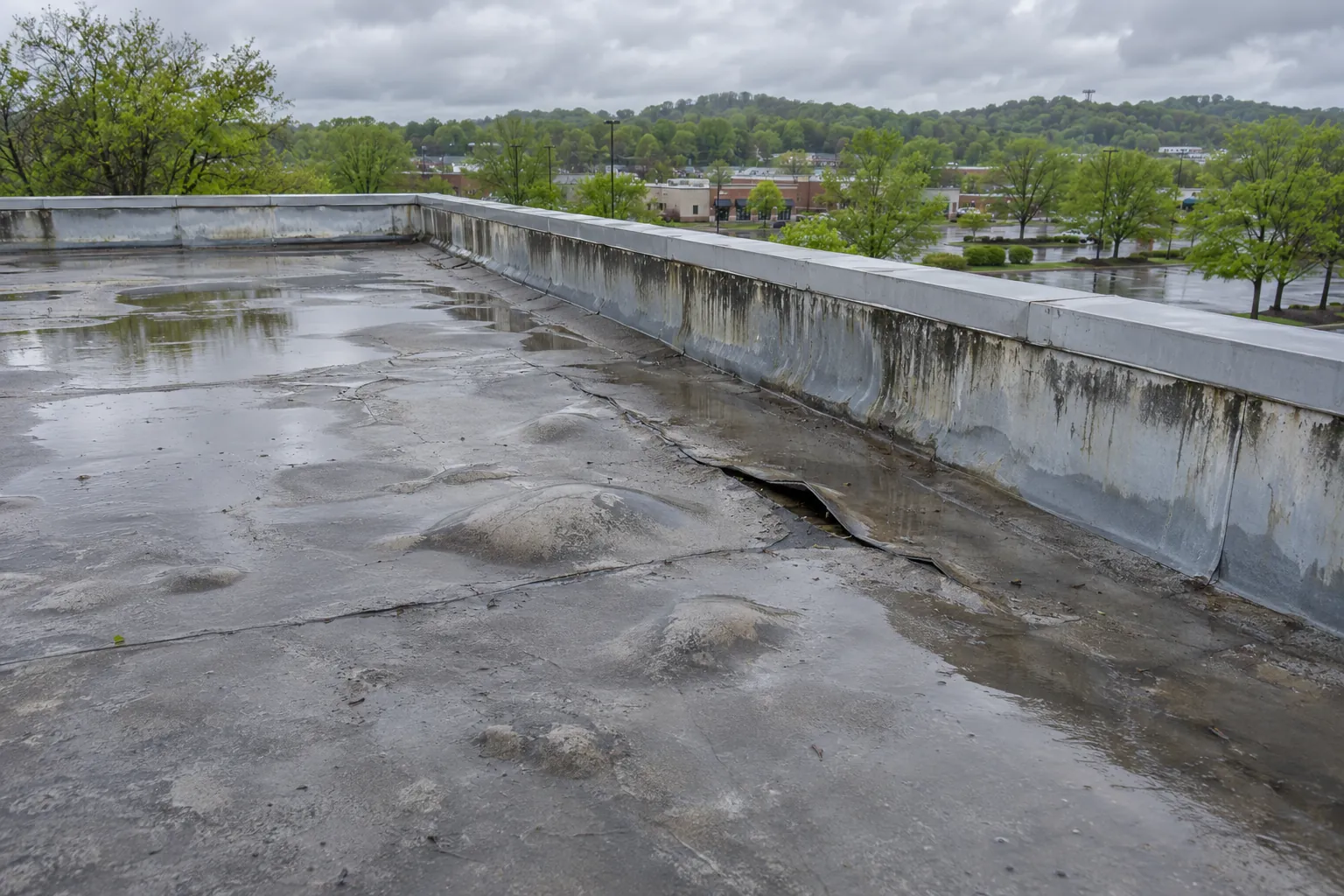
An Erlanger flat roof repair contractor sorts the roof by what it shows on top and what the moisture meter finds underneath.
| Roof Condition | Patch or Reweld | Cut Out and Rebuild | Plan Replacement |
|---|---|---|---|
| Lifted lap on a TPO or EPDM seam | Usually Fits | Rarely | Rarely |
| Cracked blister that grows each summer | Usually Fits | Sometimes | Rarely |
| Soft spot underfoot beside a drain | Rarely | Usually Fits | Rarely |
| Shrunken base flashing pulling off a curb | Usually Fits | Rarely | Rarely |
| Wet readings across most of the field | Rarely | Rarely | Usually Fits |
Most flat roof repair without replacement happens in the first four rows: detail failures sitting over dry insulation.
Flat roofs fail at their details far more often than across the open field.
A dark line of dirt along a seam where the lap has lifted.
Sun and cold move the membrane every day. A TPO lap gets cleaned and rewelded with hot air; an EPDM lap gets primed and retaped.
Raised bubbles that grow a little larger each summer.
Trapped moisture or air expands in the heat and lifts the plies. Cracked blisters get cut open, dried, and patched before water reaches the insulation.
Rings of dirt that mark where water sat after the last rain.
A clogged strainer, a drain set too high, a missing cricket, or a sagging deck. Each has its own fix, and deck sag goes to an engineer first.
Spongy spots underfoot and readings that stay high after dry weather.
Water got past a seam or penetration and soaked the boards. Those boards come out, and new insulation and cover board go in before the membrane closes.
Patching TPO, EPDM and modified bitumen each takes its own material, since mixed products bond poorly.
Weathered TPO gets cleaned with membrane cleaner and extra prep so it accepts the weld. Patches run several inches past the damage with rounded corners, and welds get probed after cooling.
EPDM chalks with age, so the surface gets scrubbed with primer before a peel-and-stick or seam tape patch goes down over the T-joint or seam edge that pulled apart in the cold.
Loose granules and debris come off first, then a torch-applied or cold-adhesive cap sheet patch covers the split, blister cut, or open lap on modified bitumen.
Strainers get new domes, clamping rings get reset, high drains get retrofit inserts, and tapered crickets go in behind curbs so water stops sitting against the flashing.
Targeted repairs pay off on a flat roof while the insulation is still dry.
A rewelded or retaped lap stops the slow seep that soaks insulation boards a few feet at a time, long before a drip ever reaches the ceiling.
SeamsCleared drains and new crickets get water off within a day or two, which slows wear on seams and on the membrane surface where it used to pond.
DrainsCutting out soaked boards and installing new insulation and cover board brings the roof back to its surrounding height and stops the spread of wet areas.
DeckNew base flashing and termination bar at curbs and walls replace the shrunken corners where most membrane roofs start leaking.
CurbsThat usually means wet boards under the membrane. Note these before the visit so the moisture check starts in the right place.
Five steps take a flat roof repair from the stain to a tested seam.
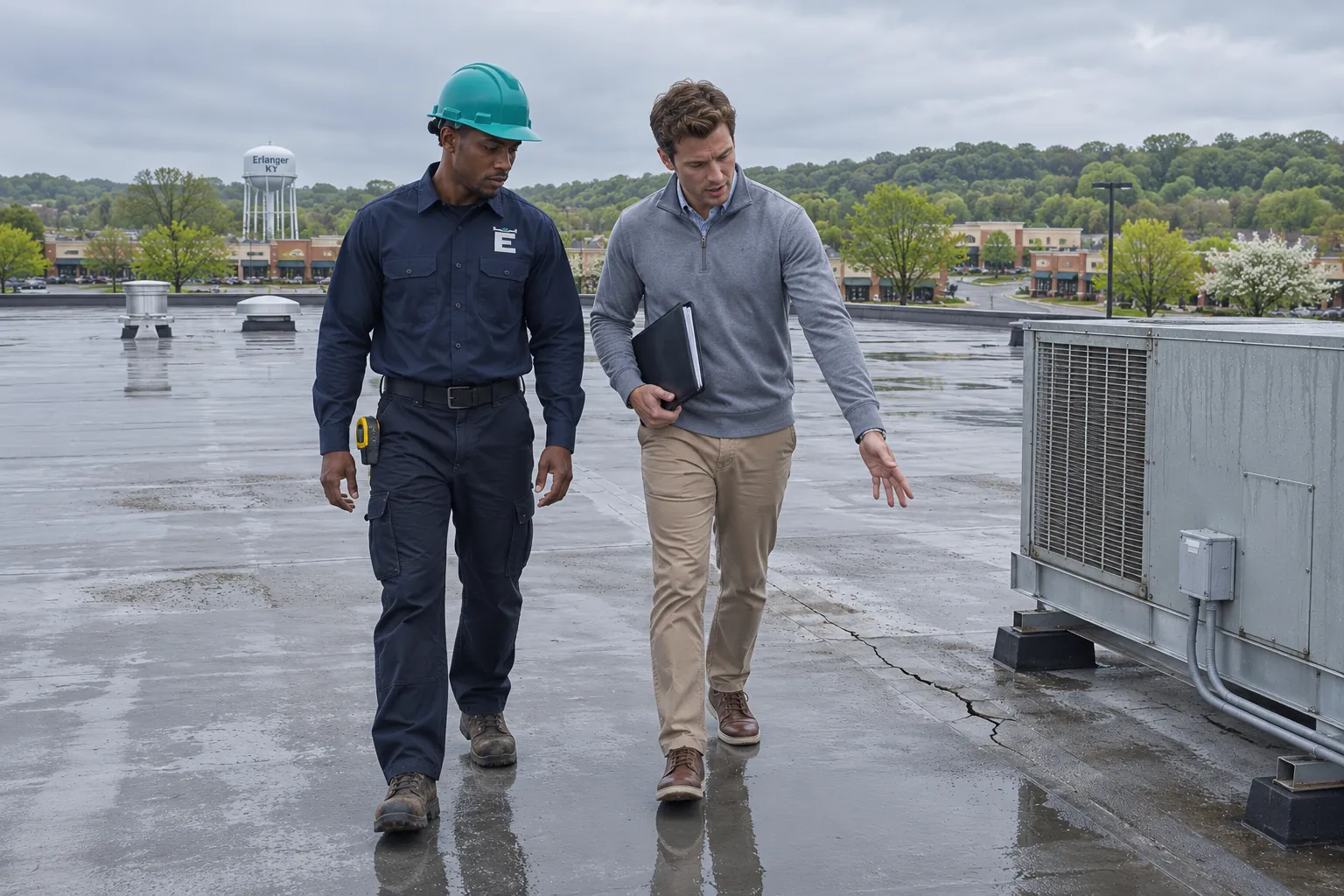
Moisture meters sweep the area around the leak, and an infrared scan at dusk or a core cut confirms which boards are wet before anything gets opened up.
TPO, EPDM, modified bitumen, or built-up plies each take a different patch. The membrane type and its age set the cleaning, priming, and bonding method.
Membrane over soaked insulation gets cut back, wet boards come out, and dry insulation plus cover board go in flush with the roof around them.
A matching section closes the opening with rounded corners and several inches of overlap past the damage on every side.
Welded seams get probed once they cool, drains get flushed, and photos show the closed area beside the original damage.
Flat roofs share buildings with other repair needs.
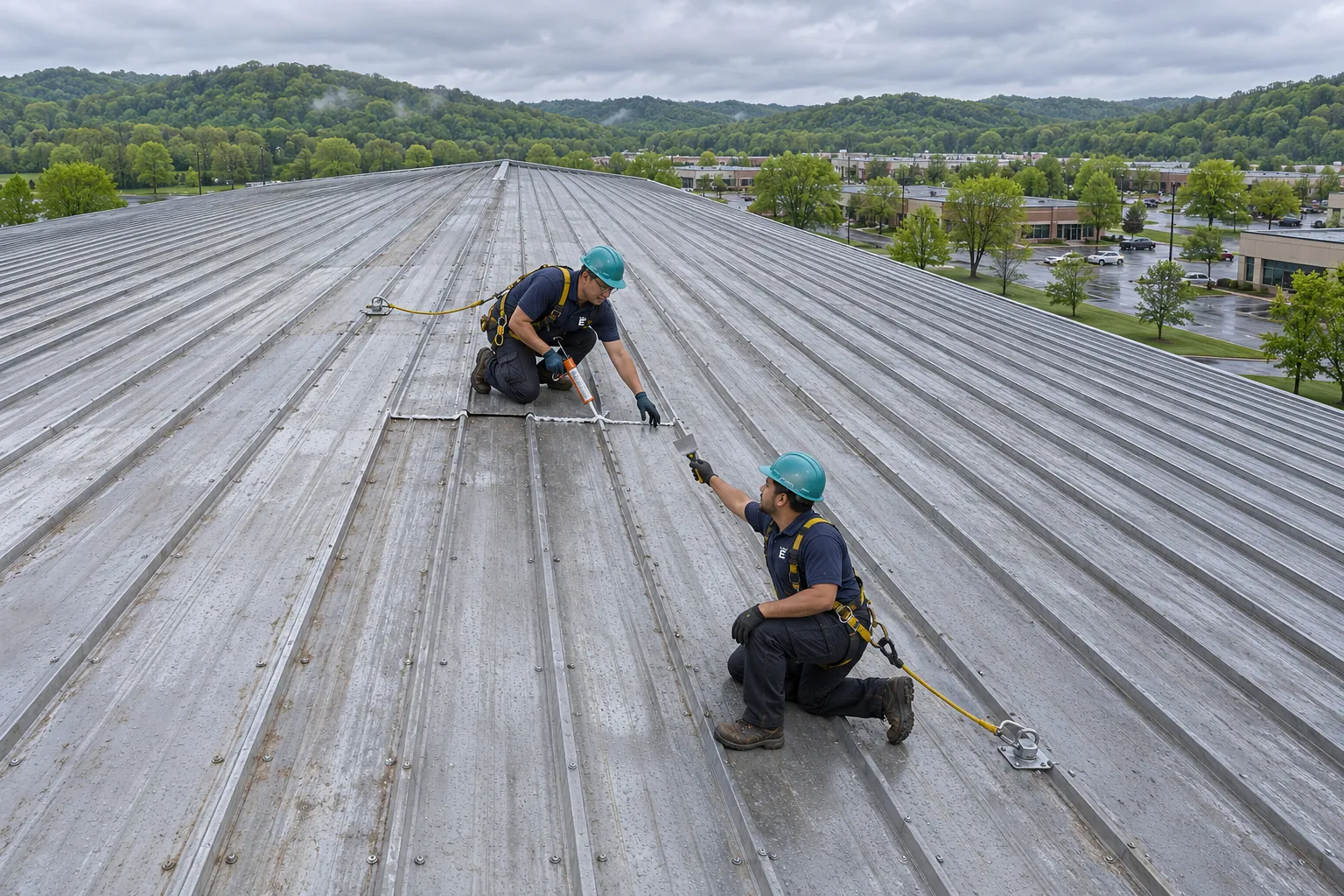
A metal addition or canopy on the same building leaks at screws and laps instead of seams, so it gets its own fastener and lap repairs.
Metal roof repair in Erlanger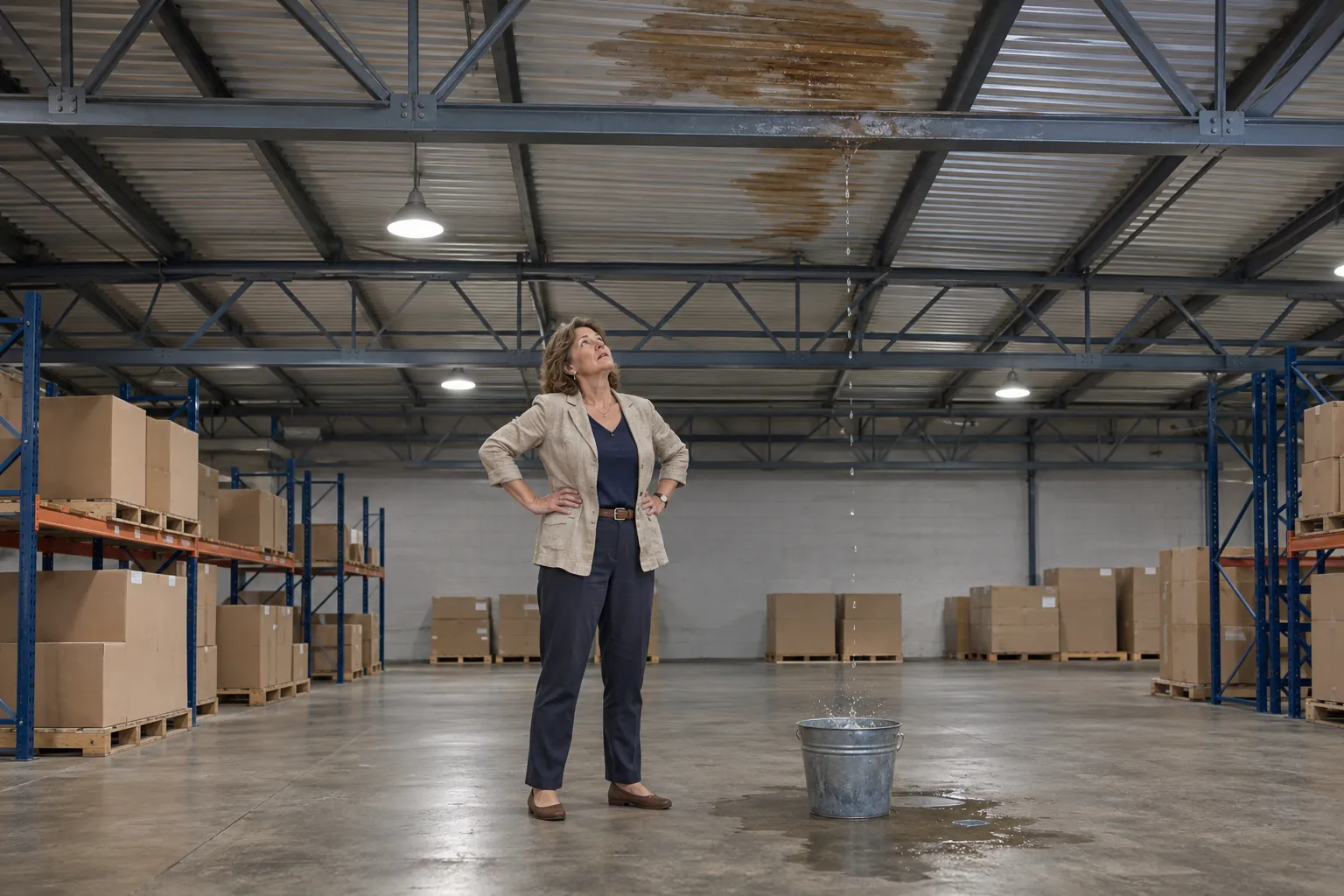
When the drip shows inside but no soft spot shows on top, leak tracing finds the curb, boot, or pitch pan at fault first.
Leak tracing and repair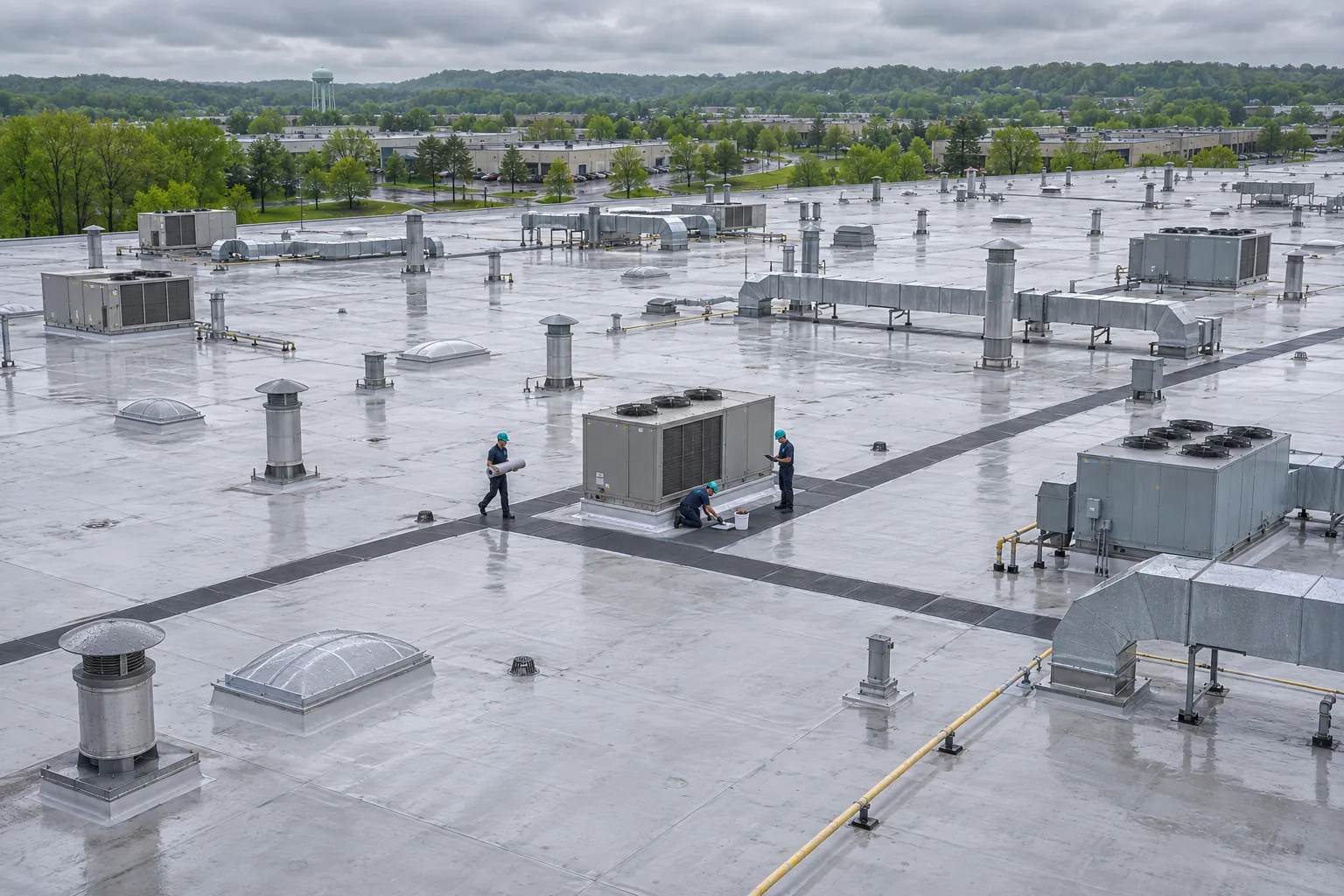
Plant roofs with grease at exhaust fans need membrane that resists oil, plus containment so the repair holds.
Industrial roof repairOwner questions on flat roof repair, answered for low-slope membrane roofs.
Open seams, small punctures, loose flashing, blisters, and clogged drains are all repairable when the insulation around them is dry. Field seams get rewelded or retaped, curbs get new base flashing and termination bar, and open coping joints get resealed.
Each gets its own material. TPO takes a hot-air welded TPO patch after cleaning, EPDM takes primer and a tape patch, and modified bitumen takes a torch-applied or cold-adhesive cap sheet. Patches run past the damage with rounded corners.
On built-up and modified bitumen roofs, a cracked blister gets cut open, folded back to dry, checked for wet insulation, sealed back down, and covered with a patch that extends past the cut. Small unbroken blisters can be watched instead.
By finding why the water stays. Clogged strainers get cleared and fitted with new domes, high drains get retrofit inserts, missing crickets get added with tapered insulation, and a sagging deck goes to an engineer before any shimming.
Handheld moisture meters sweep suspect areas, infrared scans at dusk show wet boards holding heat longer, and core cuts pull a sample down to the deck. Soft spots underfoot are often the first sign an owner notices.
When wet areas cover a large share of the roof, piecing it back together costs more than it saves. Smaller wet sections get cut out and replaced with dry boards and cover board, then closed with a new membrane section.
Send the address and where the soft spot or drip is. A moisture check comes before any patch goes down.