Age
Leaking Gutter Seams
- You See
Drips from gutter joints along the building front.
- What It Means
Sealant at the seams has failed. Joints get cleaned and resealed, and rusted sections get replaced.

Hire a Fort Mitchell commercial roof repair contractor for gutters, downspouts, and box gutters, repaired so roof water still leaves where the drainage design sends it.
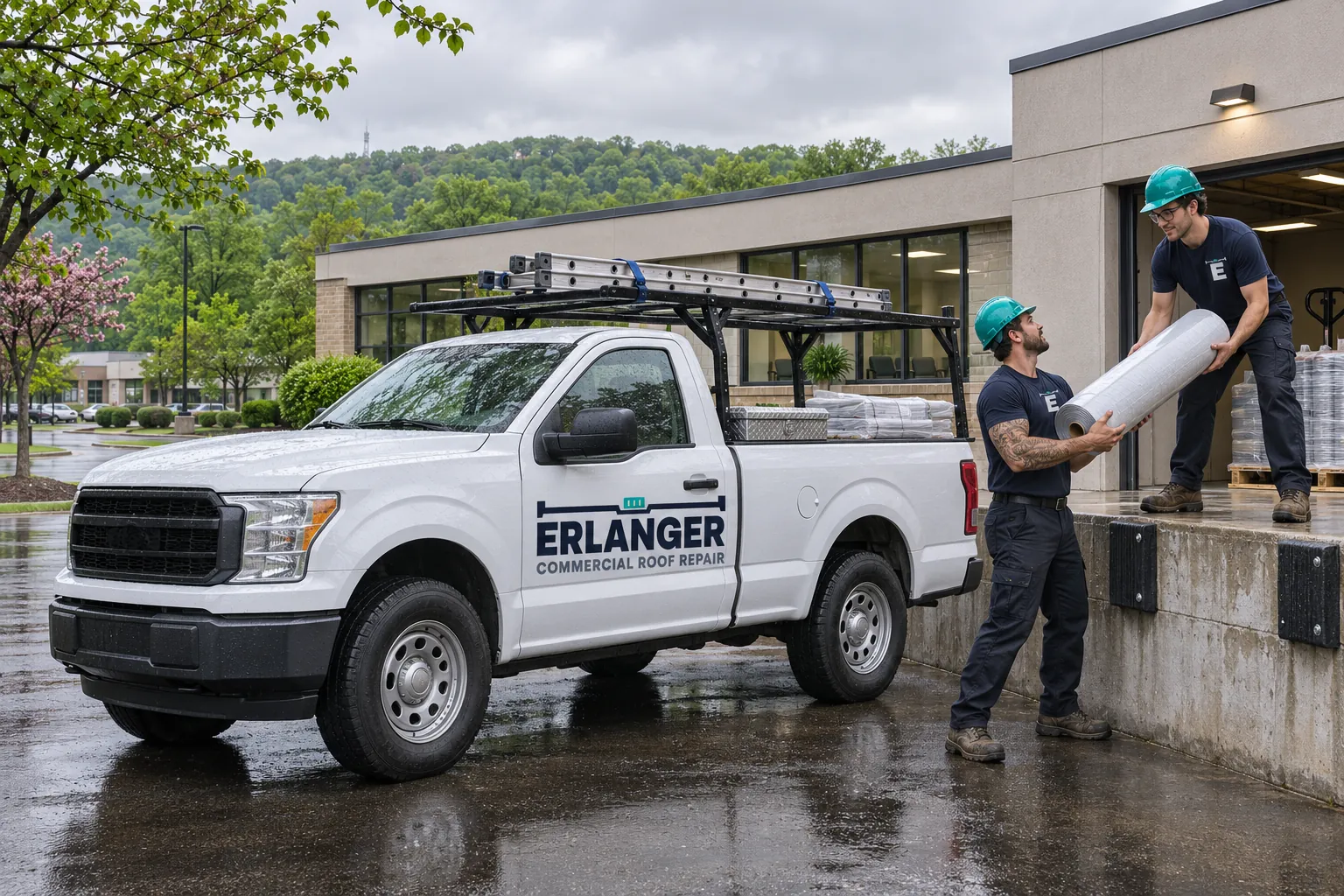
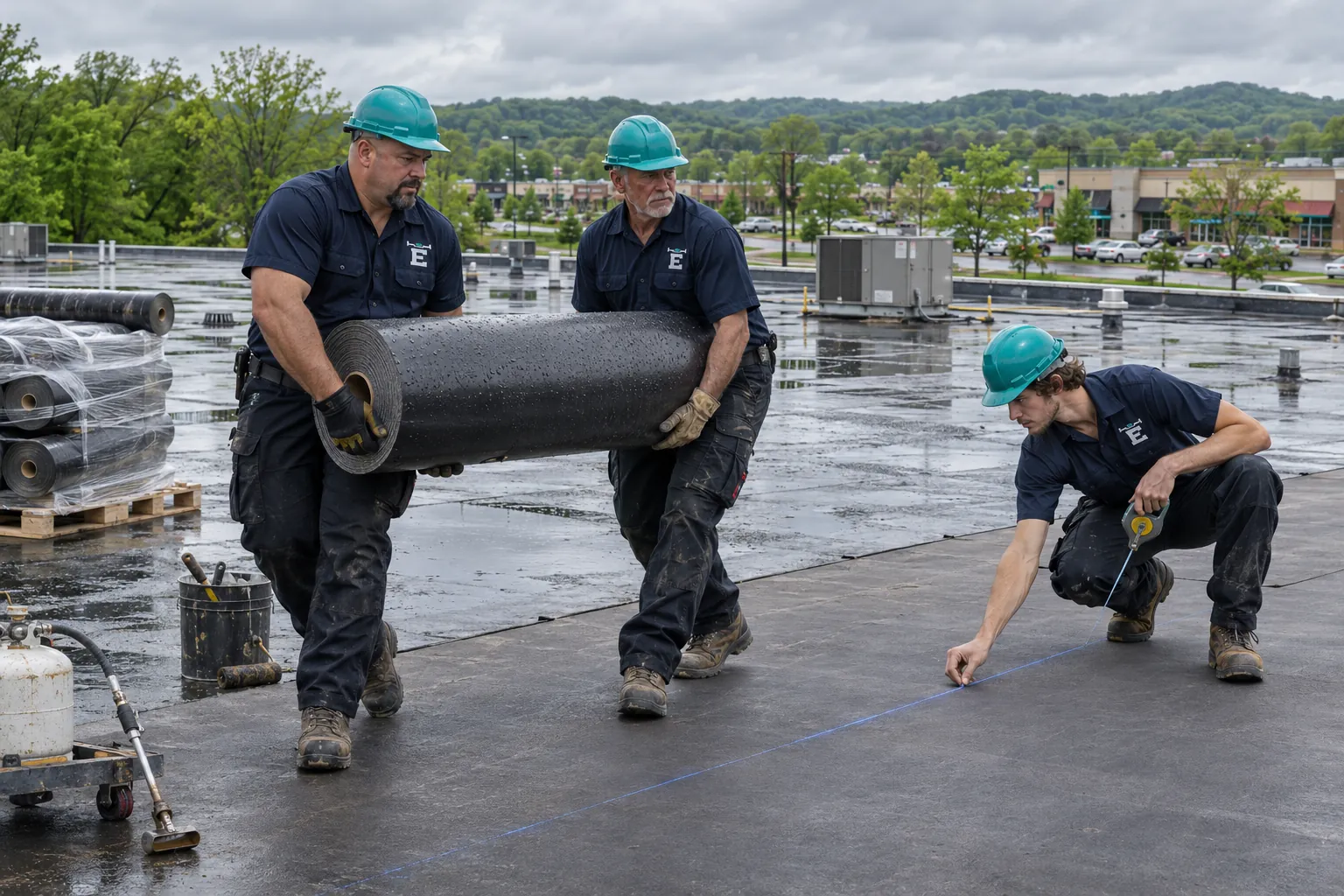
A Fort Mitchell commercial roof repair contractor treats the gutter line as part of the roof, since water that leaves the roof still has to land somewhere sensible.
Repaired downspouts on Fort Mitchell commercial buildings should discharge where the original drainage design sends them. Sanitation District No. 1 of Northern Kentucky provides stormwater management for 29 cities in the region.
Changes to stormwater routing are worth checking with SD1, since rerouting a downspout can send water across a parking lot or onto a neighbor's property.
Eave and gutter trouble shows up as roof leaks, wall stains, and wet foundations.
Drips from gutter joints along the building front.
Sealant at the seams has failed. Joints get cleaned and resealed, and rusted sections get replaced.
Gutters pulling away from the fascia, with low spots that hold water.
Hangers have loosened or sit too far apart. Added hangers bring the gutter back to its slope.
Water spilling over the gutter during heavy rain.
A crushed elbow or a clog stops flow. Clearing the line and replacing damaged pieces gets water moving.
Meltwater stains on interior walls near the eave in winter.
Ice dams in gutters push meltwater under eave trim. Clearing gutters in fall and repairing trim cut down on it.
Stains inside along the wall right under a box gutter.
A built-in gutter rusted through at the bottom. A membrane liner or a new section stops the drip into the building.
Wet wall streaks around the top of a downspout.
The outlet tube between gutter and downspout has pulled loose. Resealing or replacing it puts the water back in the pipe.
A working gutter line protects the roof edge, the walls, and the ground beside the building.
Water leaving through tight gutters stops backing under eave trim, which is where many wall leaks blamed on the roof begin.
GuttersSplash blocks or extensions at repaired downspouts keep roof water away from foundation walls and entry slabs.
DownspoutsKeeping discharge where the drainage design puts it avoids sending water across a parking lot or onto a neighbor's lot.
DischargeReplacing rusted gutter sections before they split keeps a small seam drip from turning into a gutter that fails along its whole run.
SeamsChecked and cleared connections to buried storm lines keep downspouts from backing roof water up during heavy rain.
Storm LinesGutter work often sits beside other repairs on the same roof.
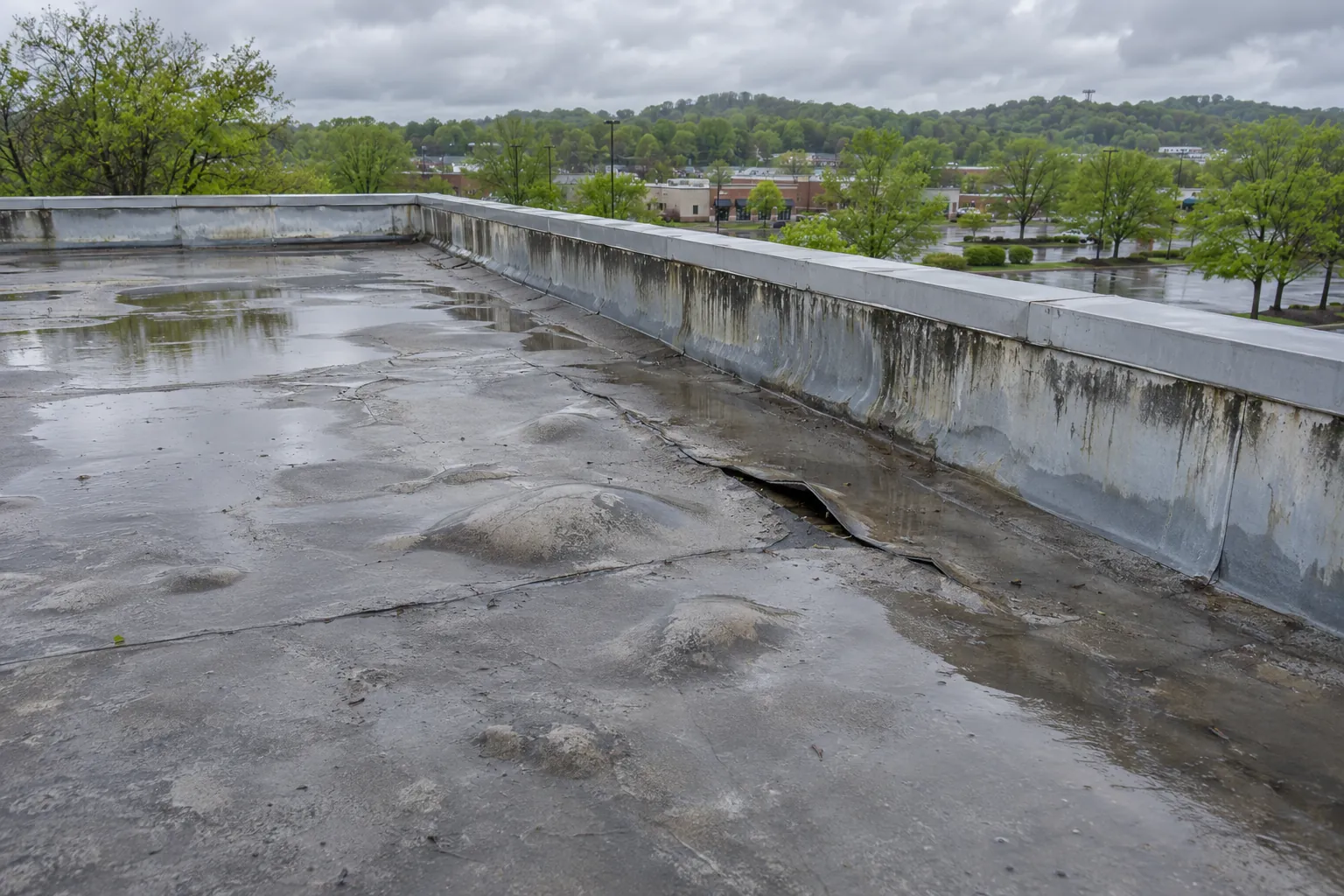
Low-slope roofs that drain to gutters get edge metal, seam, and flashing repairs where the membrane meets the gutter line.
Flat roof edge repair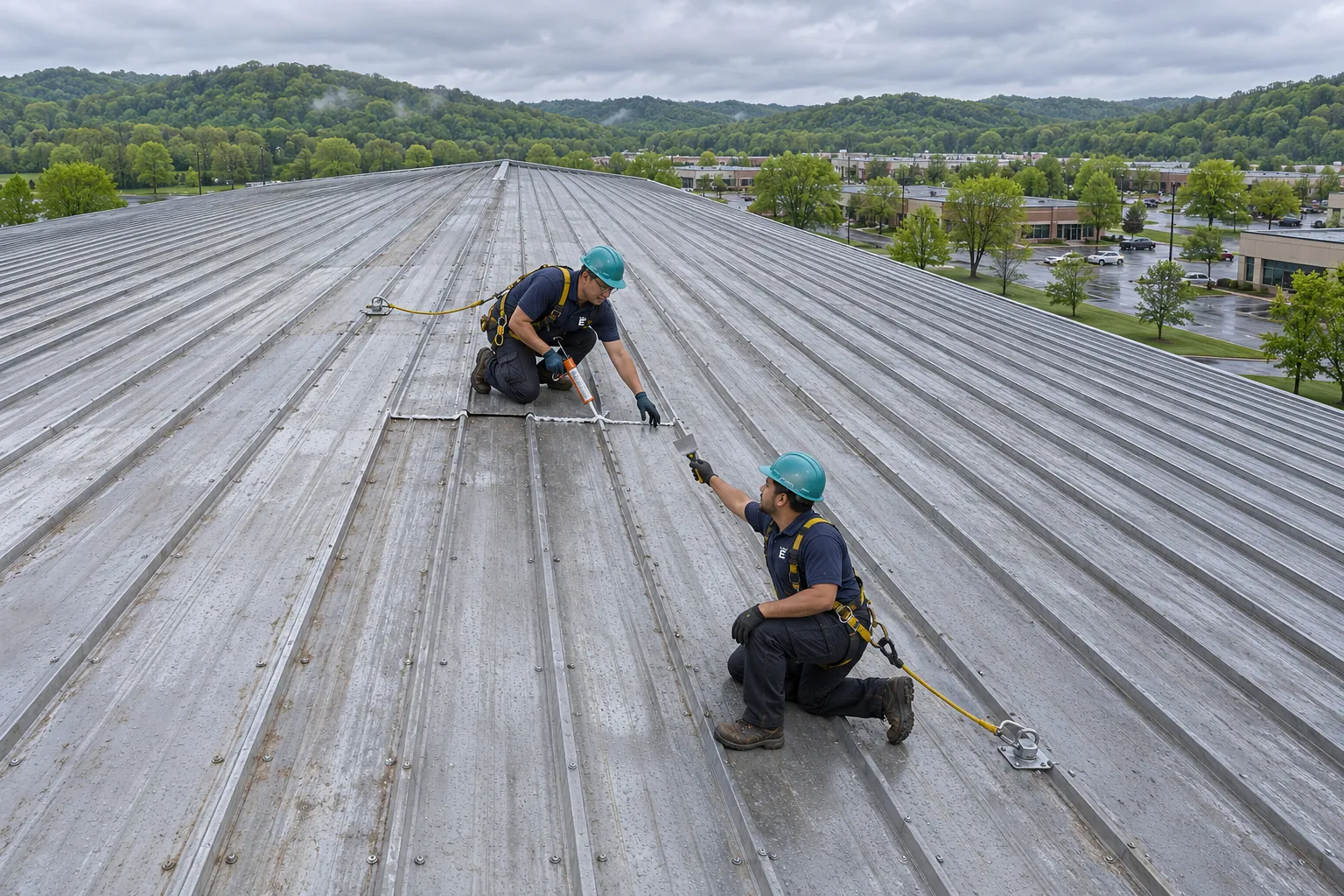
Metal buildings with hanging eave gutters and box gutters get seam, liner, and outlet repairs along with fastener work.
Metal building gutter repair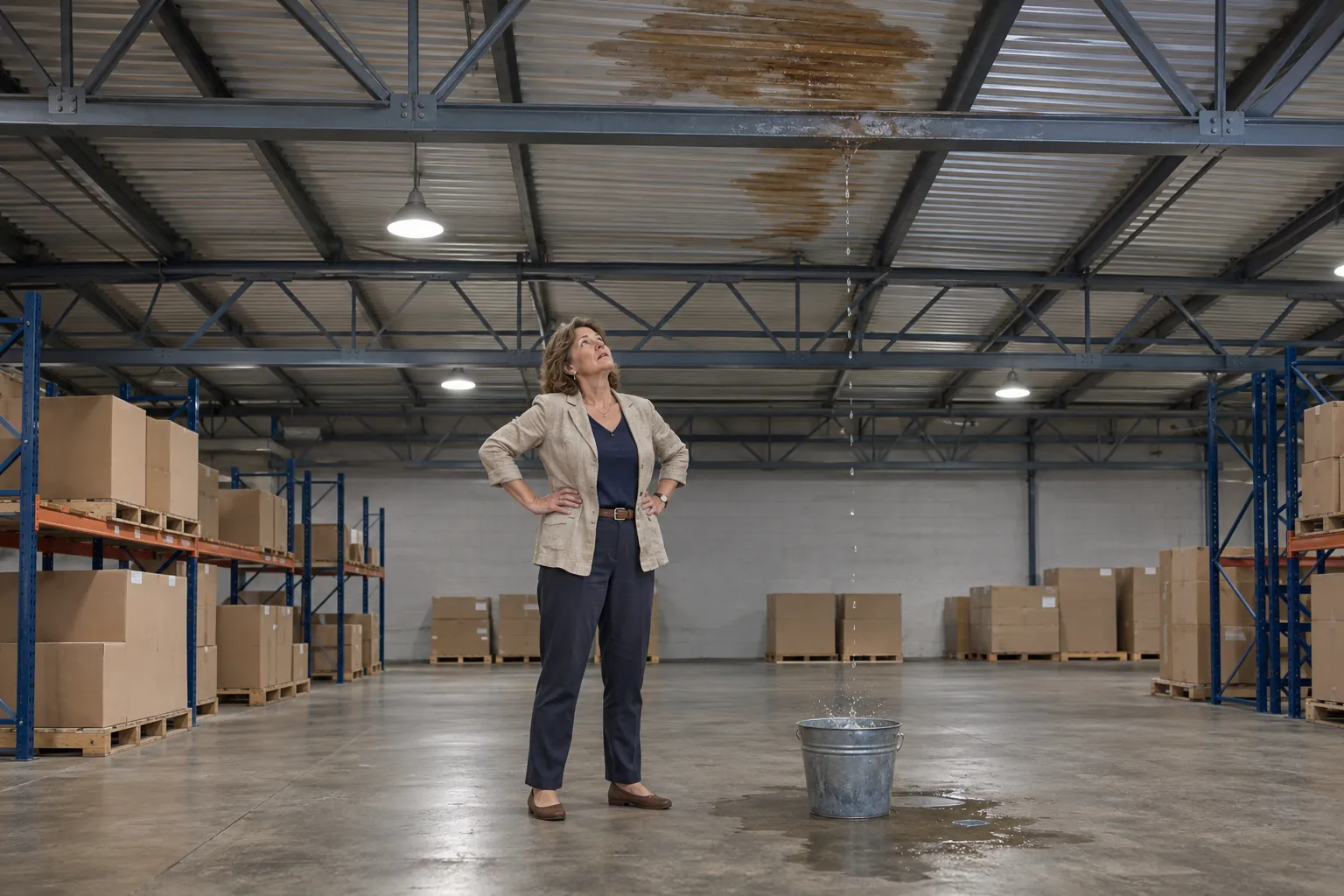
Wall stains near the eave get traced to see whether the gutter, the trim, or the roof edge lets water in.
Eave leak tracing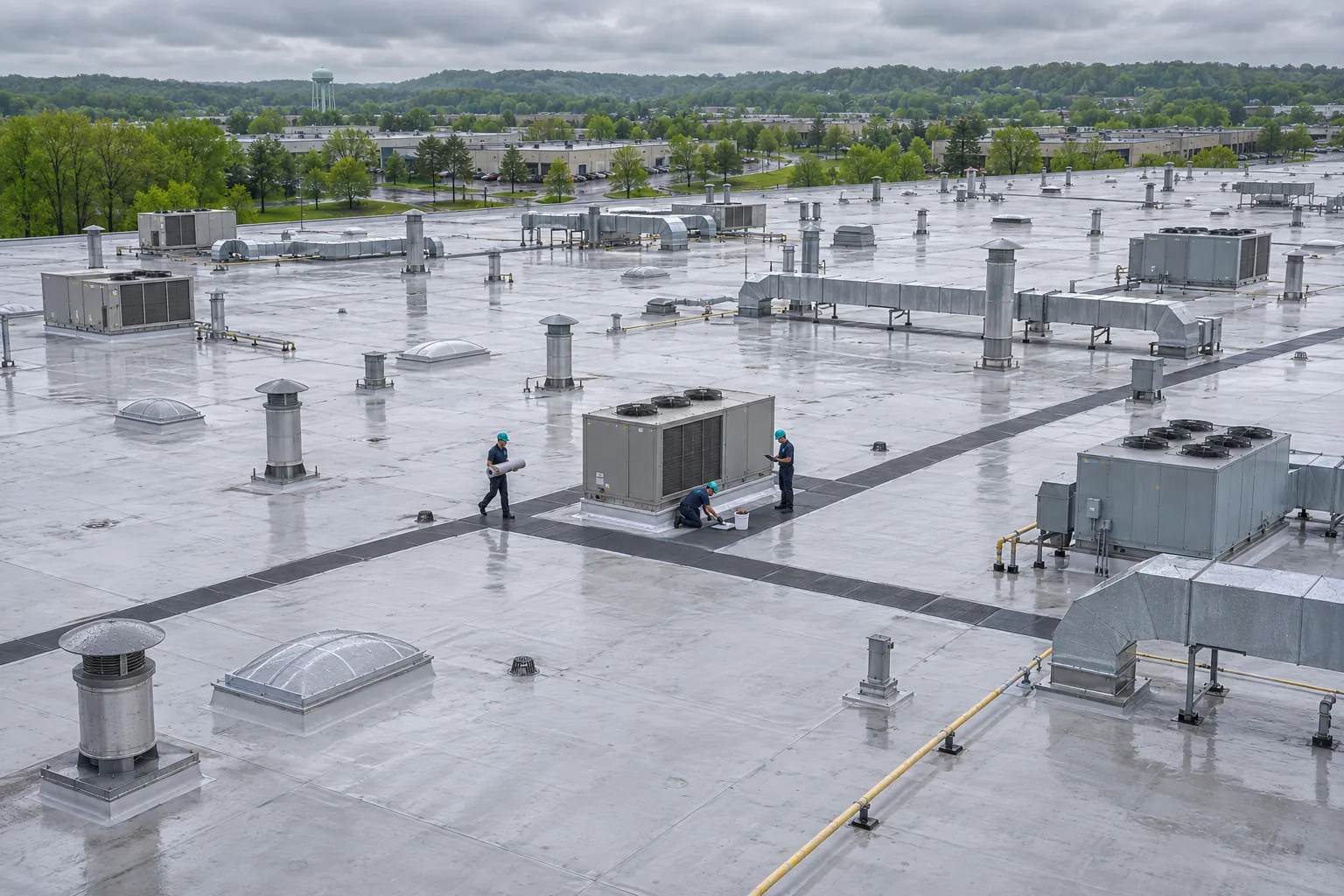
Larger service and industrial buildings with long gutter runs get box gutter linings and outlet tube repairs sized for the flow.
Long gutter run repairOverflowing gutters back water under eave trim and into the wall. Have these ready for the visit.
Gutter work follows the water from the roof edge to the ground.
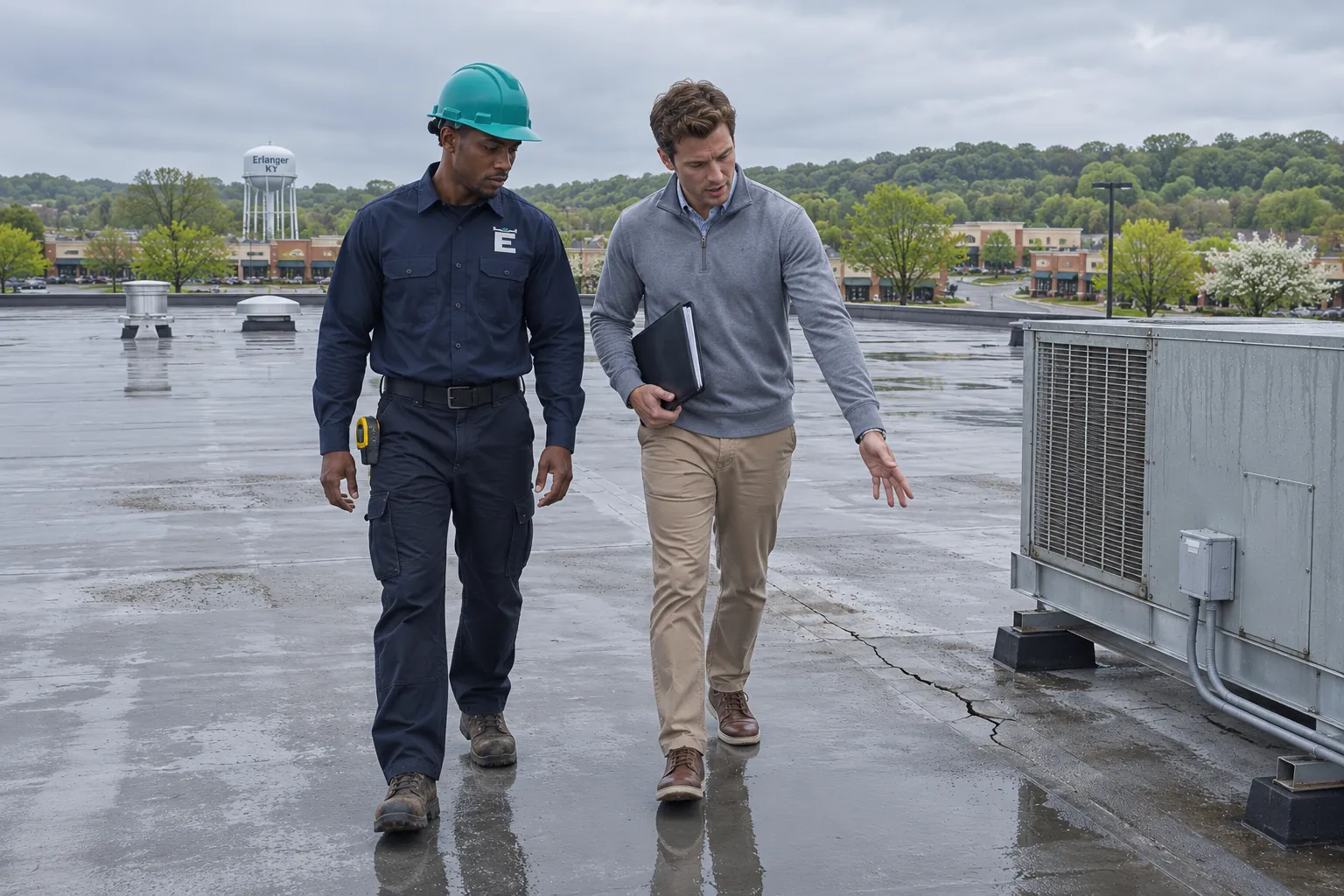
The crew checks the roof edge, eave trim, gutters, downspouts, and interior wall stains, then notes where each downspout discharges today.
Debris comes out of gutters and downspouts, and underground connections get checked for clogs and breaks.
Seams get resealed, rusted sections replaced, sagging runs rehung with added hangers, and crushed elbows replaced.
Downspouts go back to where the original drainage design sends them, and any change gets checked with SD1 first.
Splash blocks or extensions go in where water hits foundations, and photos record the finished line.
Strip centers, clinics, churches, and metal flex buildings are the roofs we repair most in the other towns. Outside them? Call us or send us a message.
Elsmere edges out every other nearby town in population. Its strip center roofs bring a tracing job, since water entering over one unit can stain the ceiling of another.
Elsmere Commercial Roof Repair →Answers on gutters, downspouts, and stormwater.
Where the original drainage design sends them. SD1 handles stormwater management for 29 Northern Kentucky cities, so any change to where roof water goes is worth checking with SD1 before work starts.
Loose or widely spaced hangers get refastened and added, low spots get brought back to slope, and leaking seams get resealed. Rusted sections get replaced so the gutter holds its shape.
Debris gets cleared from the top and the line gets flushed, crushed elbows and bottoms get replaced, and connections to underground storm lines get checked for clogs and breaks.
They carry water away from foundation walls and entry slabs. Roof water that lands right beside the building soaks the ground there and finds its way toward the foundation.
Ice dams in gutters push meltwater under eave trim and into the wall. Clearing gutters after leaf drop reduces ice buildup, and damaged trim gets repaired so meltwater has no path inside.
Yes. Cleaning after leaf drop keeps gutters and downspouts flowing, reduces ice buildup, and catches loose hangers and open seams while the weather still allows repairs.
Tell us where the gutters overflow and where the downspouts drain now. We repair the line and keep the discharge on plan.