Movement
Fastener Back-Out
- You See
Screw heads standing proud of the panel, some with rust rings.
- What It Means
Daily heating and cooling moves the panels and works screws loose. Water runs down the shank into the building.

As an Erlanger commercial metal roof repair contractor, we reseal and refasten R-panel, PBR, and standing seam roofs on warehouses, shops, and flex buildings.
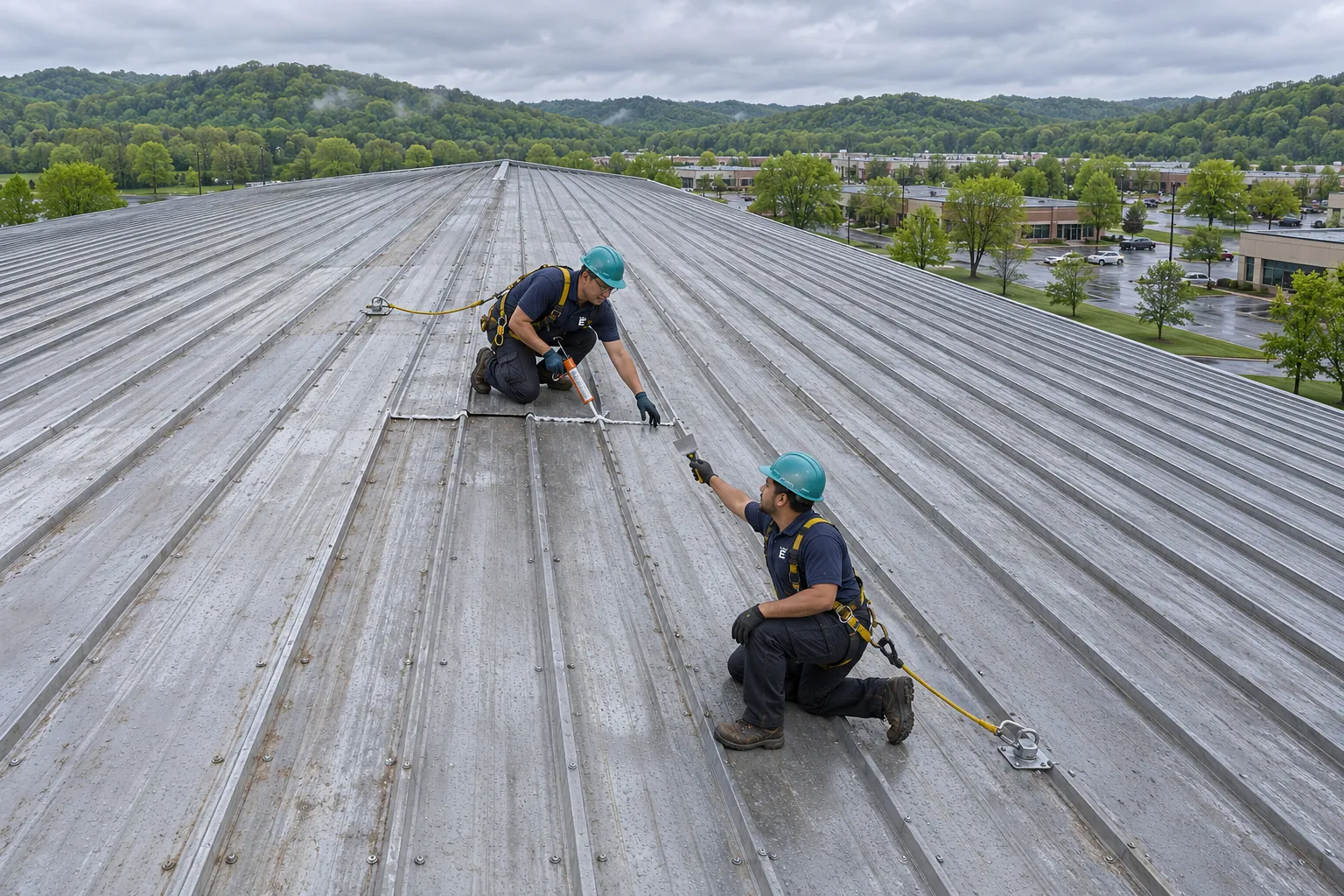
An Erlanger commercial metal roof repair contractor reads how much solid steel remains, since that decides between a patch, a cut-in section, or a full panel.
| Roof Condition | Refasten or Reseal | Patch or Cut In | Replace Panel |
|---|---|---|---|
| Loose screws with dried washers | Usually Fits | Rarely | Rarely |
| Surface rust with no holes | Usually Fits | Rarely | Rarely |
| Pinholes in one panel | Rarely | Usually Fits | Rarely |
| Rust-through at an eave or end lap | Rarely | Usually Fits | Sometimes |
| Rust across most of a panel | Rarely | Rarely | Usually Fits |
Rust that keeps coming back at the same spots points to water trapped in a lap or condensation from inside the building.
Panels outlast the parts that seal them. These are the parts that go first.
Screw heads standing proud of the panel, some with rust rings.
Daily heating and cooling moves the panels and works screws loose. Water runs down the shank into the building.
Drips along a line where two panels overlap downslope.
The sealant or butyl tape in the lap has failed. Old sealant comes out, rusted stitch screws get replaced, and the lap gets resealed.
Water only during wind-driven rain, near the top of the roof.
Foam closures under the ridge cap crumbled or blew out. New closures, cap fasteners, and sealant at the cap laps fix most of these.
Stains running down an inside wall right under the eave.
A built-in box gutter rusted through at the bottom or its seams opened. Lining it with membrane or replacing the section stops it.
Metal repairs reuse the panel profile already on the building wherever the steel is solid.
Loose or rusted screws come out and new ones go in with fresh washers, upsized where the hole has wallowed out, driven to the torque that seals without crushing.
Stitch screws along the lap get replaced, new butyl tape or sealant goes in as specified for the panel, and older laps get a fabric-backed sealant over the top.
Rust-through at an eave or lap gets cut out and a new piece goes in. R-panel and PBR come in many profiles, so a sample of the existing panel gets matched.
Hanging gutters get resealed joints and added hangers, box gutters get a membrane liner or a new section, and crushed downspouts and loose outlet tubes get replaced.
Most metal roofs leak at a few hundred sealing points while the steel itself still has years left.
New screws and washers across a whole row stop the shank leaks that show up as rust streaks, and neighboring fasteners get checked since they age together.
FastenersResealed end laps stop the drips that line up across a warehouse ceiling where panels overlap, one of the most common metal building leaks.
LapsFresh foam closures keep wind-driven rain out from under the cap, the leak that shows only in storms and gets blamed on the wrong part of the roof.
RidgeWire brushing, priming, and sealing surface rust while it has no holes keeps the panel in service and avoids cutting in new steel later.
PanelsBox gutters that hold water again keep it from backing under eave trim and into the wall, where it looks like a roof leak from inside.
GuttersThat is the most common metal roof leak sign. Have these ready and the visit goes straight to the right rows.
Metal repairs follow the screws and laps, row by row.
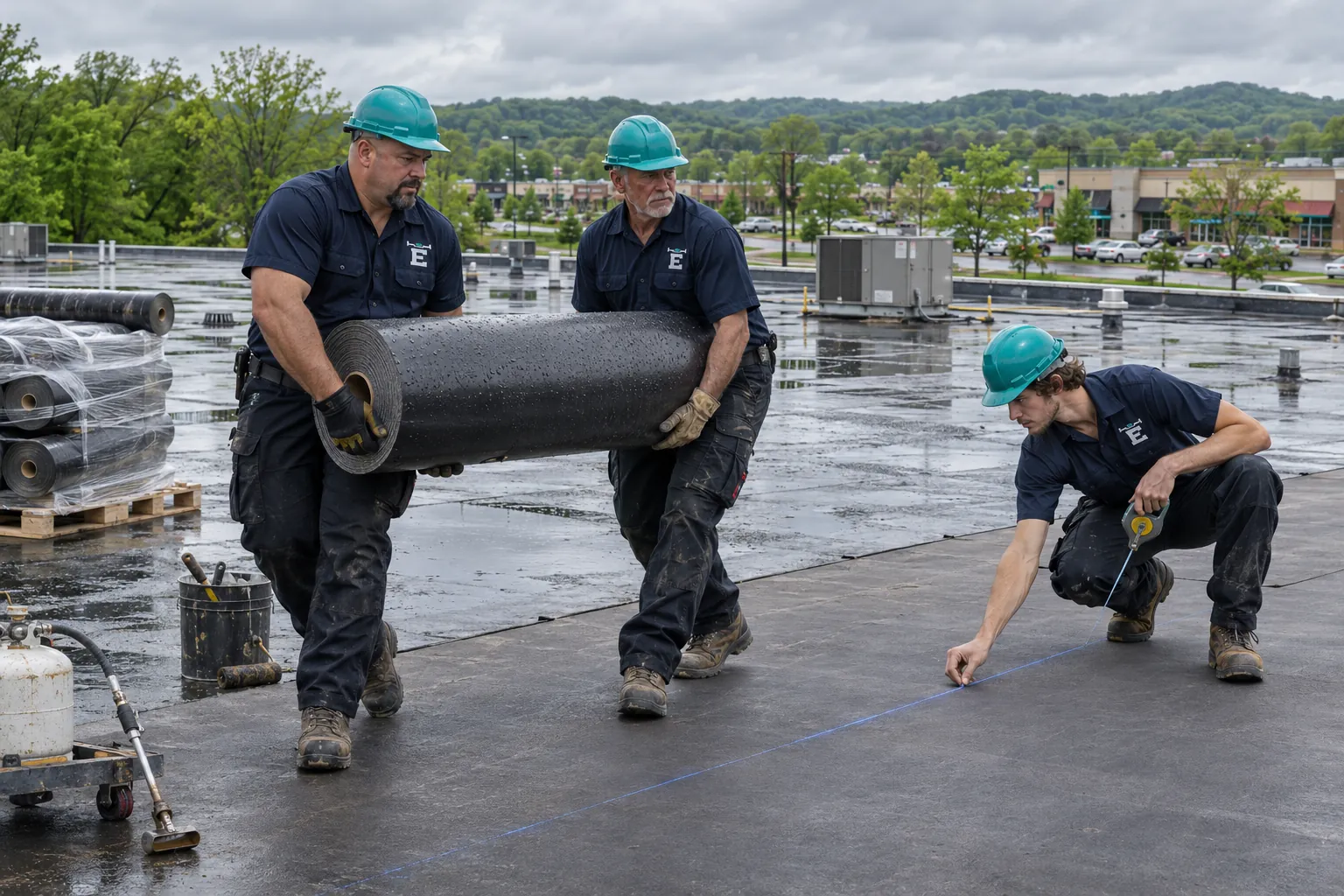
Inside, rust trails along purlins and drips lined up under laps point the way. On top, every fastener row, end lap, ridge cap, and penetration boot in that area gets checked.
A piece of the existing R-panel or PBR goes with the order so replacement sections match the profile and color of what stays on the roof.
Loose and rusted screws come out, upsized screws with new washers go in, and stripped holes that will not take a screw get a metal patch.
Old sealant gets cleaned from end laps, butyl tape or sealant goes back in, and ridge caps get new closures and cap fasteners.
Fastener caps or sealant over the heads add protection on older roofs, and photos record every row and lap that was repaired.
Metal buildings often sit beside or under other roof types.
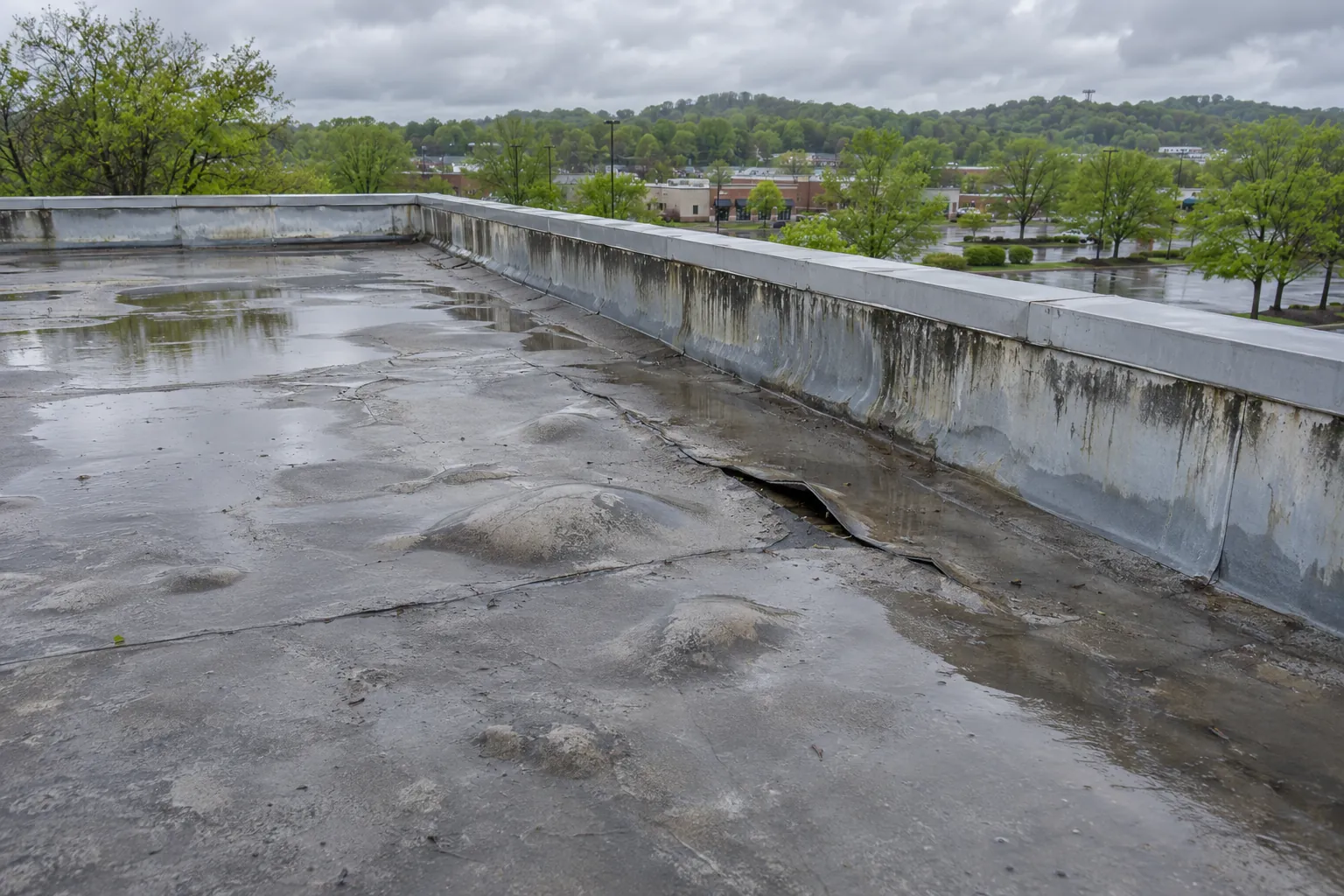
Office additions and low-slope sections on metal buildings carry membrane, so their seams and drains get flat roof repair.
Flat roof repair in Erlanger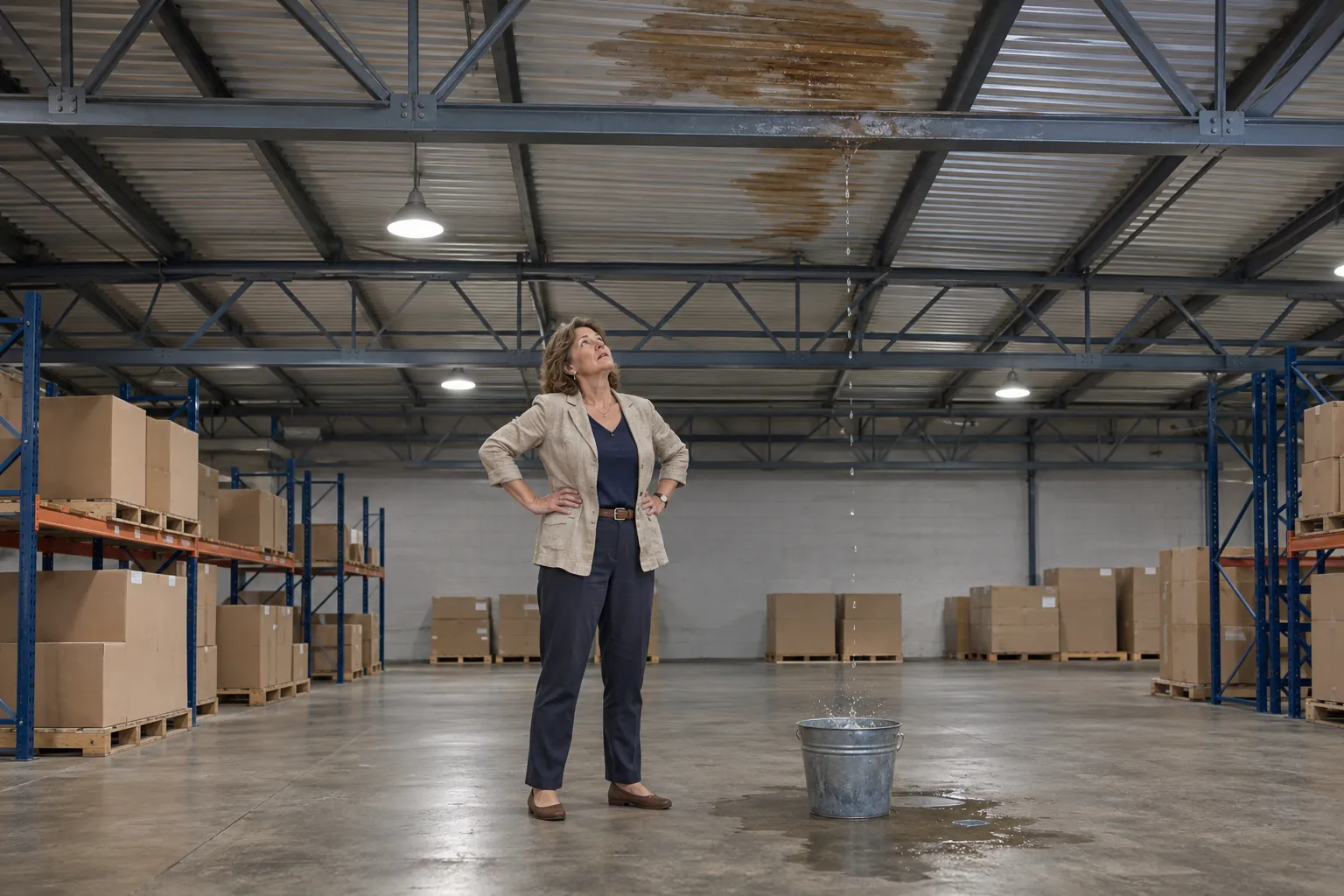
Leaks that show only in wind, or far from any lap, call for tracing before another tube of sealant goes on.
Leak tracing and repair
Metal plant roofs with process vents and exhaust fans need repairs planned around hot work and lockouts.
Industrial roof repairAnswers on screws, laps, rust, and gutters.
Most leaks come from failed fastener washers, open end laps, loose trim, and worn flashing around penetrations. The panels outlast the parts that seal them, and long roof runs on warehouses and shops see the most movement and the most fastener leaks.
Each loose or rusted screw comes out and a new screw with a fresh washer goes in, often one size larger to grip a stretched hole. Screws are driven so the washer seals without crushing, and the rest of that row gets checked.
It depends on how much solid metal remains. Surface rust gets brushed, primed, and sealed; small pinholes get a metal or fabric patch; rust-through at an eave or lap gets a new section; rust across most of a panel means a full replacement panel.
Repeat rust at the same lap or eave points to water trapped in the lap or to condensation from inside the building. The repair addresses that source, such as resealing the lap, along with the rusted metal itself.
End laps get old sealant cleaned out, rusted stitch screws replaced, and new butyl tape or sealant applied. Ridge caps get new foam closures, cap fasteners, and sealant at the cap laps, which fixes most wind-driven ridge leaks.
Built-in box gutters sit inside the roof line, so a leak there drips straight into the building. A rusted bottom or failed seams get a membrane liner or a replaced section, and the outlet tube gets resealed or replaced.
Tell us the panel type if you know it and where the drips line up. We start with the screws and laps above them.