Movement
Loose Screws
- You See
Screws that turn by hand or stand above the panel.
- What It Means
Thermal movement backed them out. They get retightened, or replaced with a larger diameter where the hole is stretched.

Call a Crescent Springs commercial roof repair contractor for metal flex buildings along I-71/75, where backed-out screws and dried washers cause most leaks.
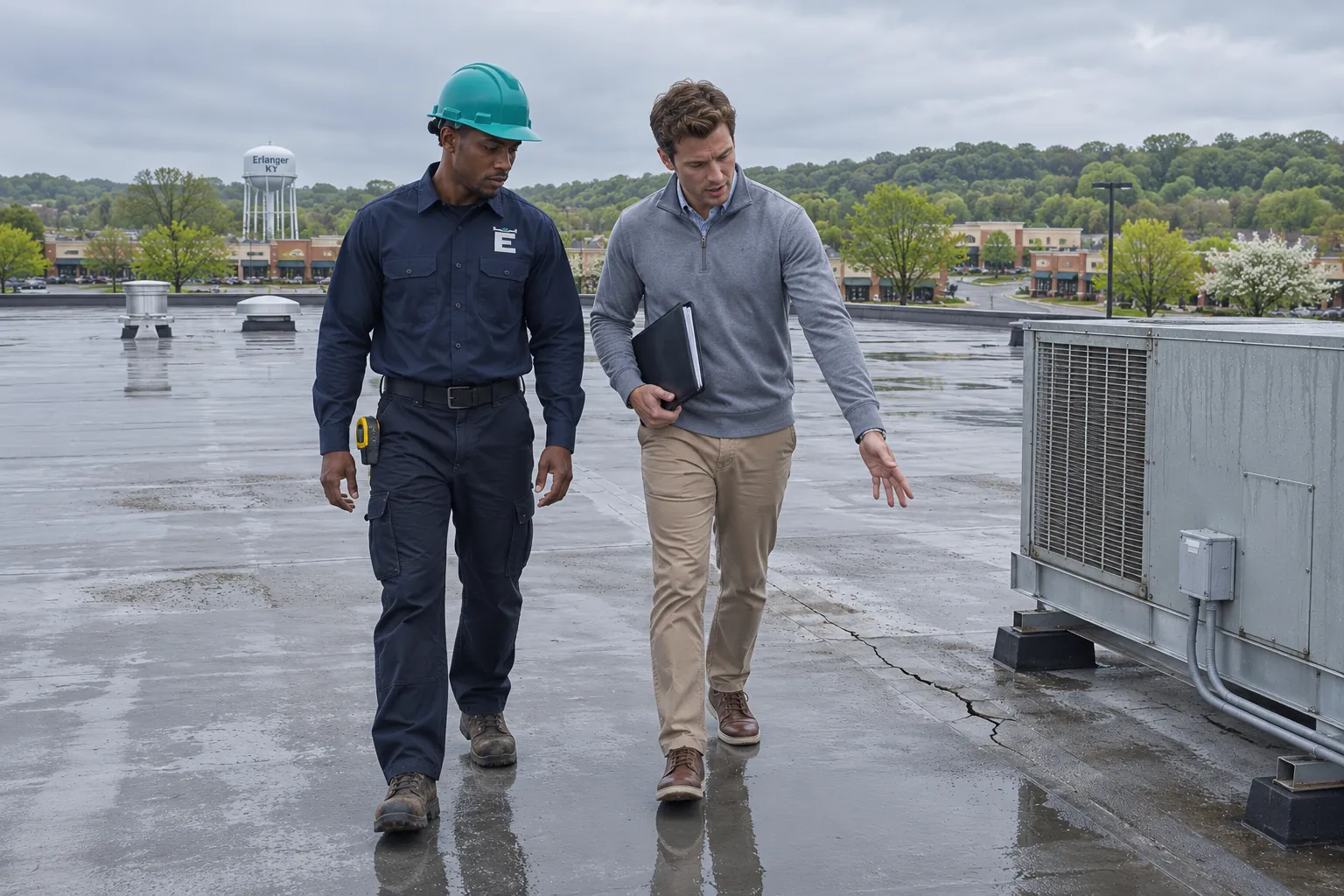
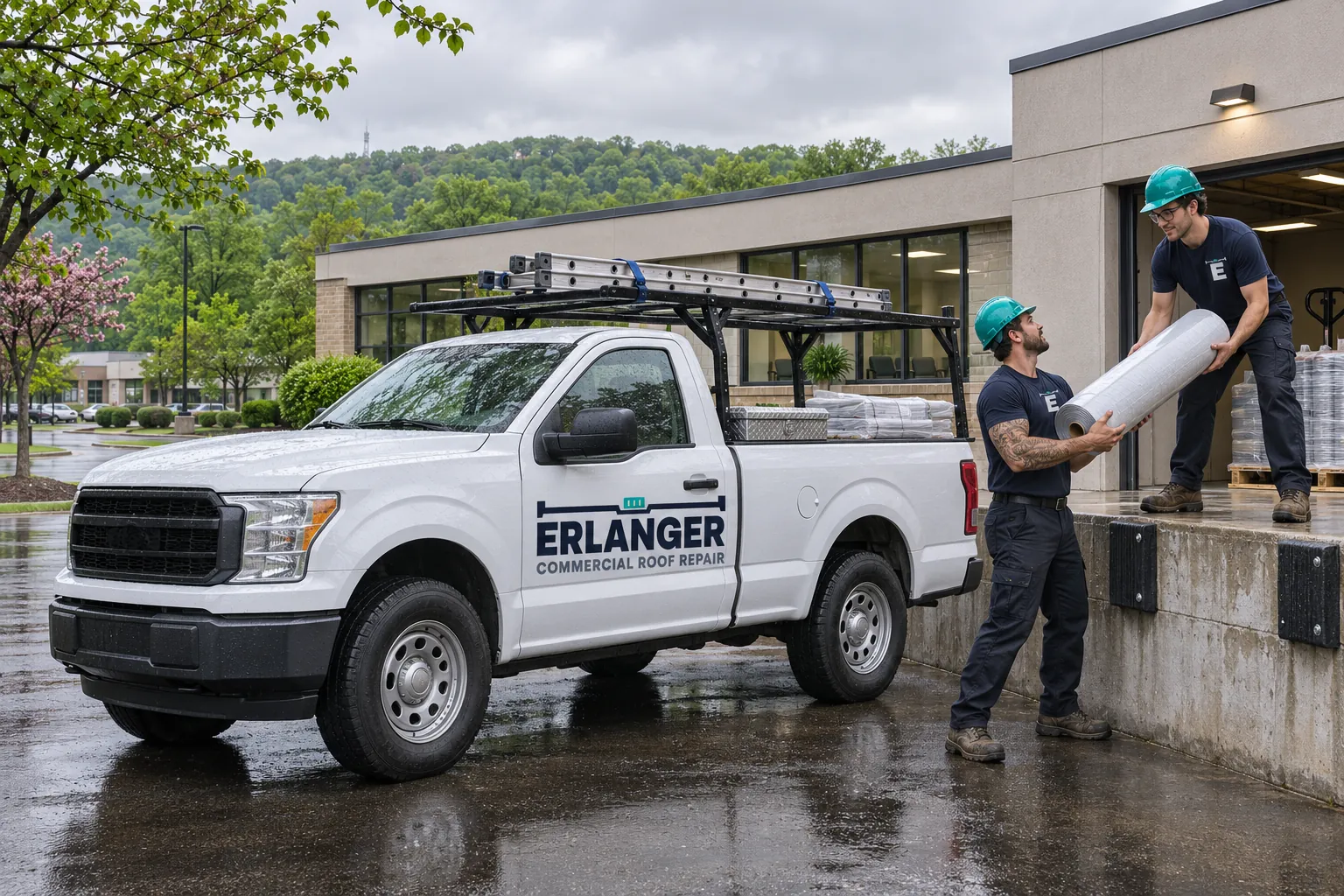
A Crescent Springs commercial roof repair contractor spends most of the time here on screws, because exposed-fastener metal roofs on flex buildings along I-71/75 carry thousands of them.
Panel movement over years loosens screws and dries out washers, and each one becomes a possible leak point. Rust stains under screw heads are the giveaway from the roof.
Road film from the interstate settles on these roofs, so sealant and patches need extra cleaning prep to bond. Fastener caps add a layer of protection after the repair.
Flex buildings mix office space with warehouse bays under one metal roof, and these are its weak points.
Screws that turn by hand or stand above the panel.
Thermal movement backed them out. They get retightened, or replaced with a larger diameter where the hole is stretched.
Drips at screw lines even where screws feel tight.
The rubber washer has cracked and stopped sealing. Screw and washer get replaced together.
Fasteners that spin without tightening.
The hole is too wide to grip. A metal patch and a new fastener close it.
Orange streaks running downslope from fastener rows.
Water has been sitting at the washer. Cleaning, priming, and sealing stops the rust before it eats through the panel.
Leaks near the peak only when rain blows hard.
Foam closures under the ridge cap have crumbled. New closures and cap fasteners keep wind-driven rain out.
Water running down the outside wall below the eave.
Gutters on long flex buildings fill with debris and back water under the trim. Clearing and resealing them stops it.
A fastener repair on a flex building protects both halves of the building.
Sealed screw lines over the finished office side stop the drips that stain ceilings and soak carpet near the front of the unit.
FastenersStock and equipment in the rear bays stay dry once screw leaks along the long panel runs get closed.
PanelsCleaning road film off the panels first means sealant and patches grip the steel instead of a layer of grime.
PrepFastener caps over repaired screws add protection against the next rounds of movement and weather.
CapsLaps along the same panel runs get checked while the crew works the screw rows, since lap sealant on these roofs ages alongside the washers.
LapsMetal leads here, but flex buildings use all four repair types.
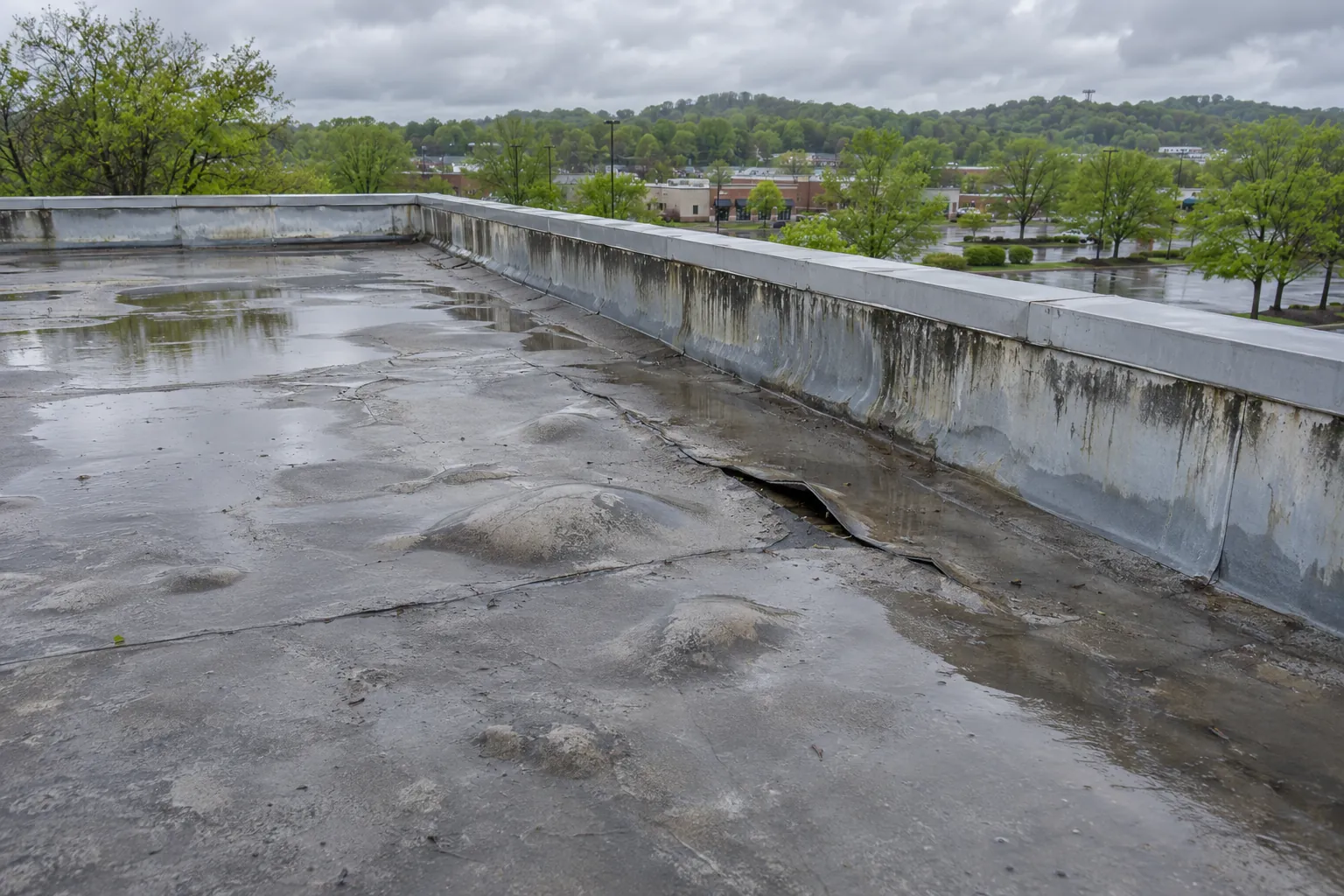
Low-slope sections over office fronts and connecting links carry membrane with its own seams and drains to repair.
Flat roof repair for office fronts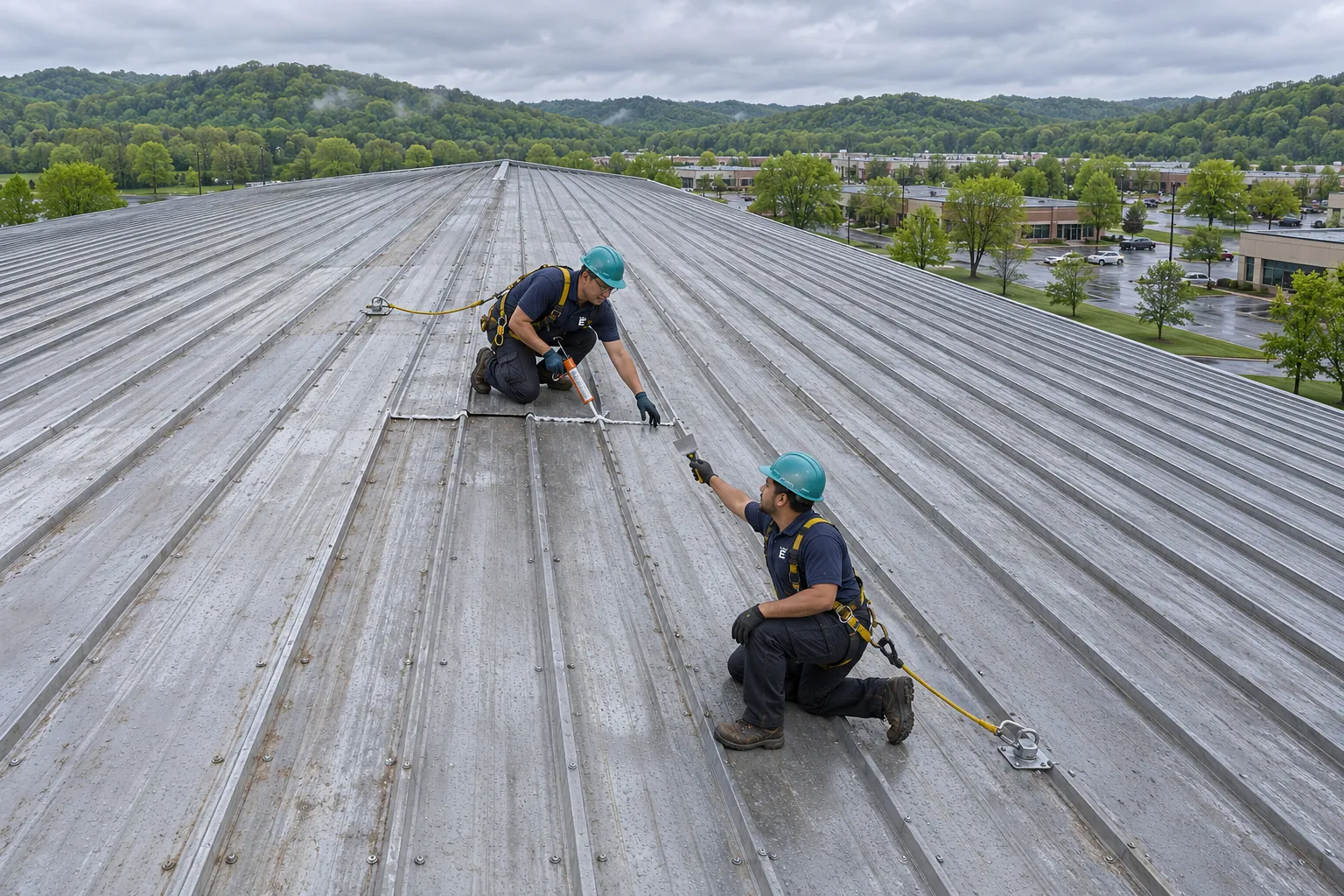
R-panel roofs get screws retightened or upsized, washers replaced, stripped holes patched, and fastener caps added.
R-panel screw leak repair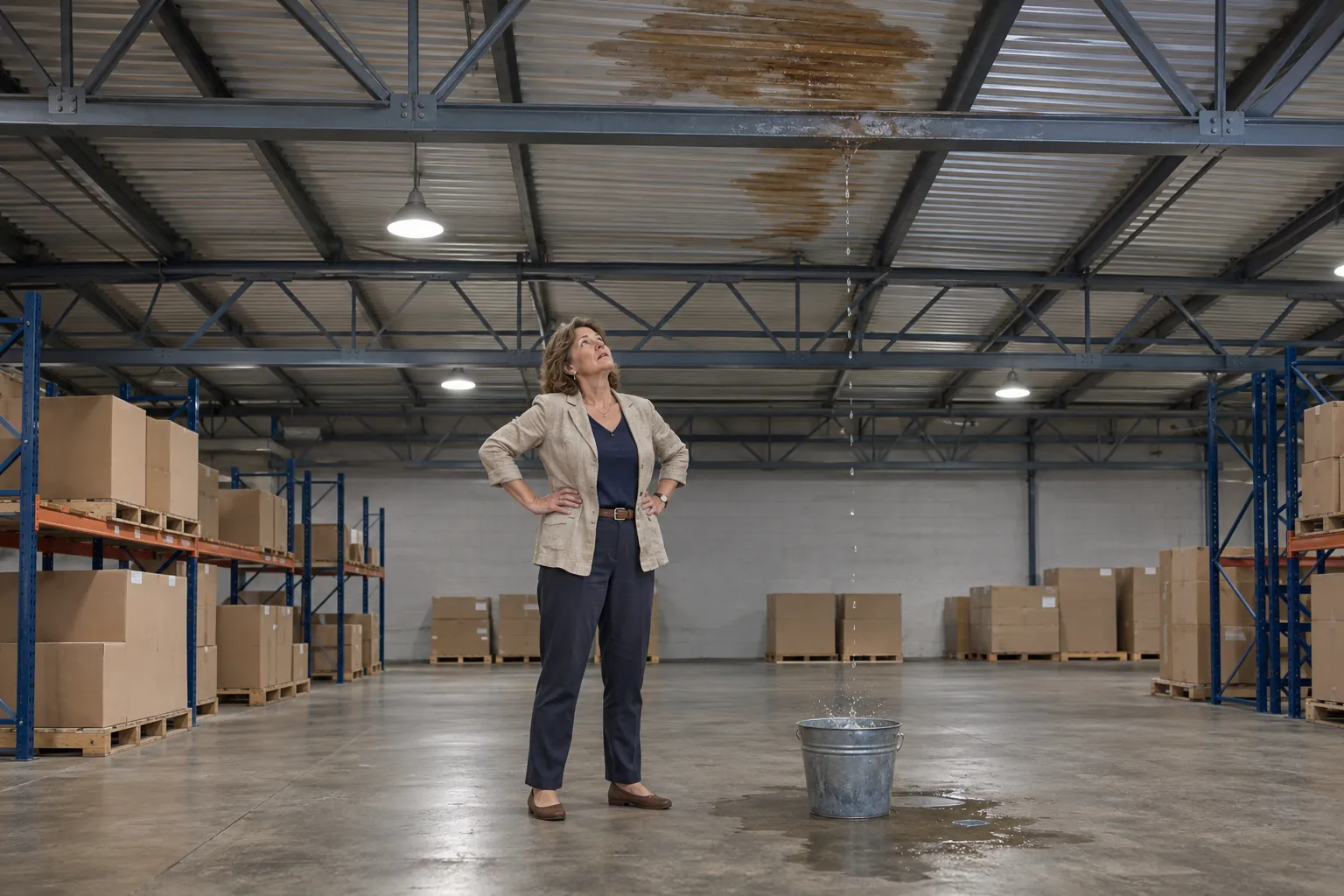
Leaks that drip far from any screw line get traced along the purlins to the true entry point.
Leak tracing along purlins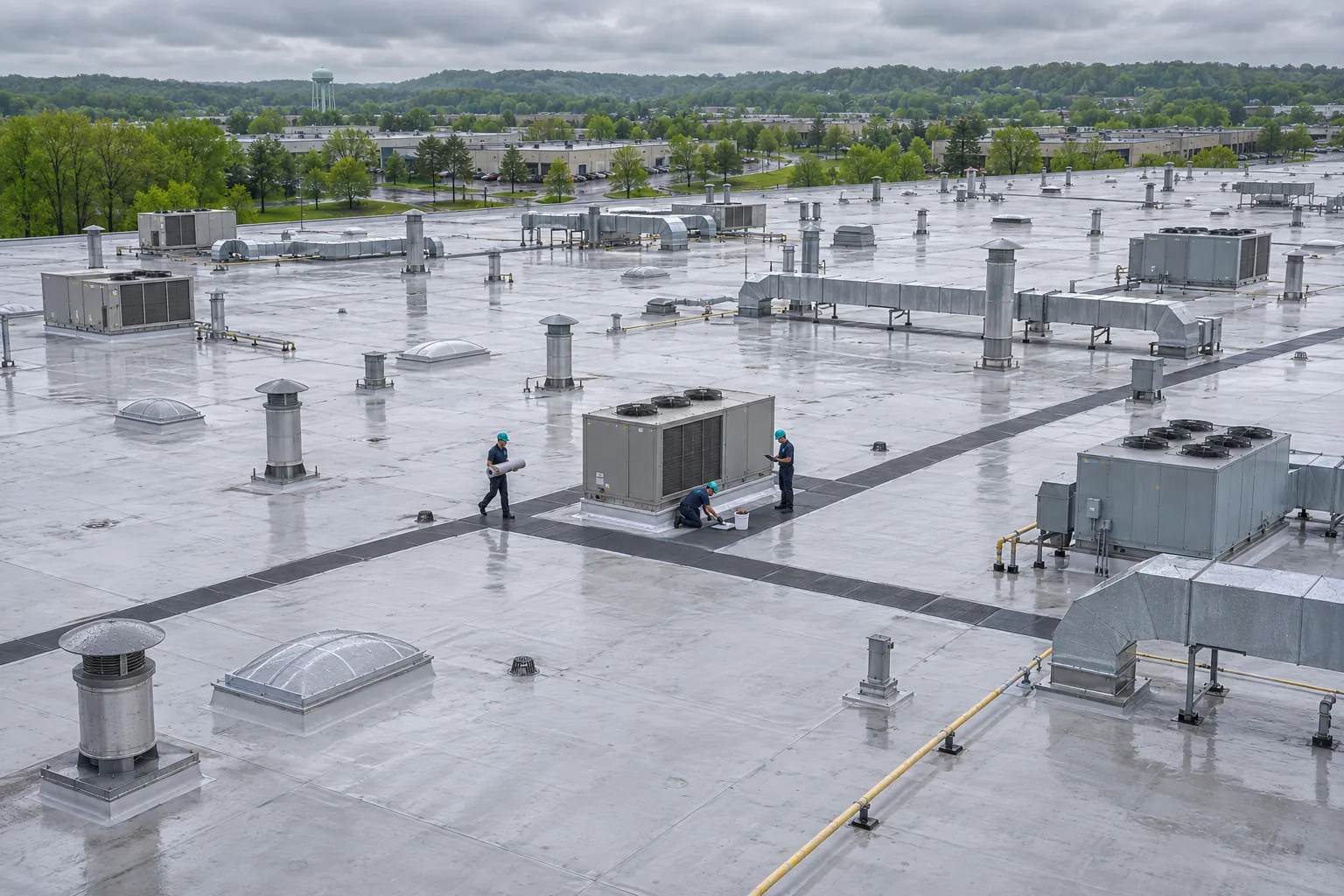
Light manufacturing tenants with exhaust and process vents need flashing and curb repairs around that equipment.
Repair around process ventsThat pattern points to fasteners. Gather these and the crew can start on the right section of the roof.
Fastener work goes row by row so nothing gets skipped.
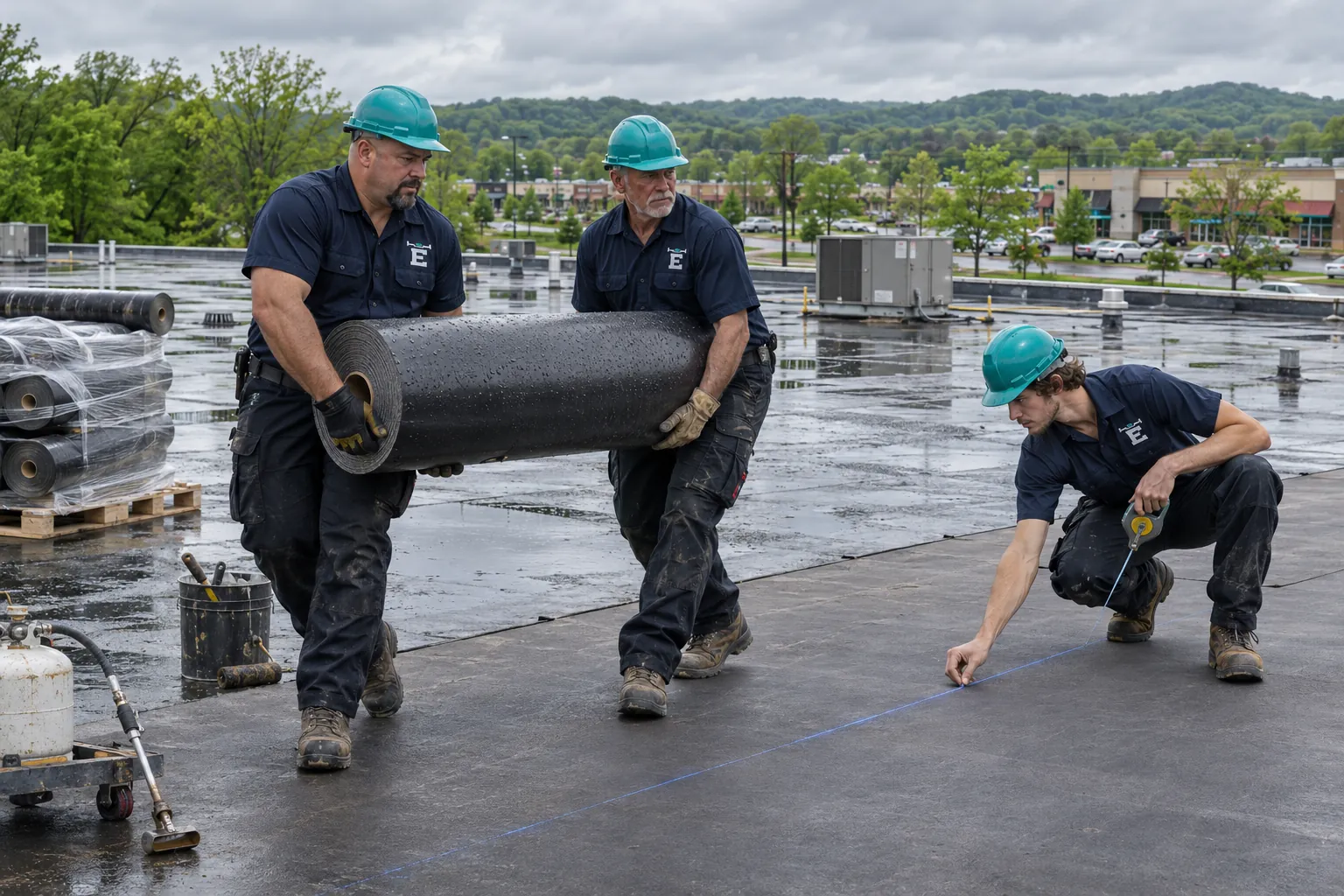
Inside, drips get matched to panel runs. On top, the crew checks screw rows, end laps, and ridge caps above each leak and marks loose or rusted fasteners.
Road film and grime come off the work area so sealant and patches bond to clean steel.
Loose screws get retightened or upsized, dried washers get replaced with their screws, and stripped holes get metal patches.
Rust stains under screw heads get cleaned, primed, and sealed before they spread.
Fastener caps go over repaired heads, and photos mark each row that was done.
Clinics, offices, churches, and retail rows make up the rest of the roofs we repair around here. Somewhere nearby? Call us or send us a message.
Elsmere is the most populous of the nearby towns. Its roofs lean toward attached storefront rows, where tracing a leak means checking every unit on a shared roof.
Elsmere Commercial Roof Repair →Answers for flex building owners and tenants.
Exposed-fastener roofs on flex buildings along I-71/75 carry thousands of screws, and panel movement over years loosens them and dries out the washers. Each one becomes a possible leak point, so repairs go row by row.
Loose screws get retightened or replaced with a larger diameter, dried washers get replaced along with the screw, stripped holes get a metal patch, and rust under the head gets cleaned, primed, and sealed.
Road film from the interstate settles on these roofs and leaves a layer that sealant grips poorly. Cleaning the work area first lets patches and sealant bond to the steel.
On older roofs, yes. Caps or sealant over repaired screw heads add a layer of protection against weather and movement after the fasteners themselves are fixed.
Yes. Fastener and lap repairs happen from the roof surface. Tenants below hear some work overhead but keep using their space, and repairs over finished offices can be timed for quieter hours.
Usually the owner or property manager, who controls roof access. Tenants can report leaks directly, and noting which bay and which panel run shows the drip speeds up the visit.
Tell us which bays drip and whether the office side is affected. We go row by row from there.